









4 Recommended Single Temperature Open Display Fridges
Choosing the right single-temperature open display fridge directly impacts your store's energy costs and ultimately your profits. However, with prices ranging from a few hundred to over a thousand dollars, many owners struggle with the decision—cheap models raise quality concerns, while expensive ones feel like a waste of money.
1. What Is a Single Temperature Open Display Fridge?
Let Cooluma clarify the concept first. A single temperature open display fridge, as the name suggests, has three key features:
Single Temperature
The entire cabinet maintains one temperature zone, typically between 0°C and 10°C (32°F–50°F) for refrigeration. It's suitable for beverages, dairy products, fruits, sandwiches, sushi, etc., but not for frozen goods.
Open Front
There is no glass door on the front, so customers can reach in and grab items directly. The advantages are excellent product visibility and easy access. The downside is that it relies on your store's air conditioning; otherwise, energy consumption rises significantly.
Display Fridge
The design focuses on "display," featuring LED lighting, adjustable multi-tier shelves, and large viewing areas to make products more appealing.
In short, if you want customers to "see it, grab it, and go," a single-temperature open display fridge is the way to go.
2. Why Do You Need a Single Temperature Open Display Fridge?
Many small business owners wonder: can I just use a household refrigerator instead of a commercial display fridge?
The answer: It works for the short term, but we don't recommend it for the long run.
Household fridges are designed for "storage," not "display." Once the door is closed, customers can't see what's inside. The open‑front design brings real value:
1. Boosts Sales: Studies show that open display fridges drive impulse purchases more than 30% higher than closed‑door fridges. Customers don't need to open a door, so visual and tactile triggers are more direct.
2. Reduces Friction: Eliminating the "door opening" step means faster grabbing, especially during peak hours, significantly improving turnover efficiency.
3. Better Product Presentation: Professional LED lighting and well‑designed shelves make beverage colors and packaging textures pop, sparking purchase desire.
3. Four Core Specifications of a Single Temperature Open Display Fridge
You need to master these four key parameters. Without them, you're easily misled by salespeople.
Spec 1: Fan‑Cooled vs. Direct‑Cool
| Feature | Direct‑Cool | Fan‑Cooled (Frost‑Free) |
|---|---|---|
| Principle | Inner walls cool directly | Fan circulates cold air |
| Frost Build‑up | Prone to frost, needs regular defrosting | No frost or very little |
| Temperature Uniformity | Poor; colder near the walls | Even |
| Moisture Retention | Better | Lower (may dry out exposed food surfaces) |
| Price | Lower | Higher |
| Best For | Fruit, vegetables, cakes | Beverages, dairy, deli items |
Note: If you store sealed products like drinks and milk, go with fan‑cooled to avoid defrosting hassles. If you sell unwrapped items like fruit, cakes, or sushi, choose direct‑cool or a fan‑cooled model with humidity control to prevent surface drying.
Spec 2: Usable Capacity vs. Gross Capacity
Many buyers only look at "gross capacity," only to find they can't fit nearly as many products as expected.
Remember: The usable capacity of an open display fridge is typically only 60‑70% of the gross capacity. You need airflow space between shelves—you can't pack it like a chest freezer.
Calculation formula: Actual number of items ≈ Usable capacity ÷ volume per item × 0.8 (reserve for restocking).
Spec 3: Climate Class
This is an often‑ignored but very important parameter.
Commercial fridge nameplates usually list a climate class, such as N, ST, or T:
- N: 16°C‑32°C (61°F‑90°F) – suitable for air‑conditioned indoor spaces
- ST: 18°C‑38°C (64°F‑100°F) – for warmer environments
- T: 18°C‑43°C (64°F‑109°F) – for hot environments
If your store gets hot in summer (above 32°C / 90°F), you must choose ST or T class; otherwise, the fridge will cycle on and off frequently, cool poorly, and consume far more electricity.
Spec 4: Energy Efficiency & Power Consumption
Energy labels for commercial fridges differ from household ones. Don't assume "Level 1 energy efficiency" means it's automatically economical.
The right approach:
1. Check the 24‑hour power consumption (in kWh).
2. Calculate annual electricity cost = daily kWh × 365 × your electricity rate.
3. Compare models and choose the one with the lowest annual cost.
Real‑life example: An old fridge uses 8 kWh per day, while a new inverter model uses only 3 kWh per day. At $0.14 per kWh, that saves about $255 per year. The money saved on electricity in just two years can buy a new fridge.
4. Single Temperature Open Display Fridges Worth Considering in 2024
The following recommendations are based on market reputation and value for money, in no particular order.
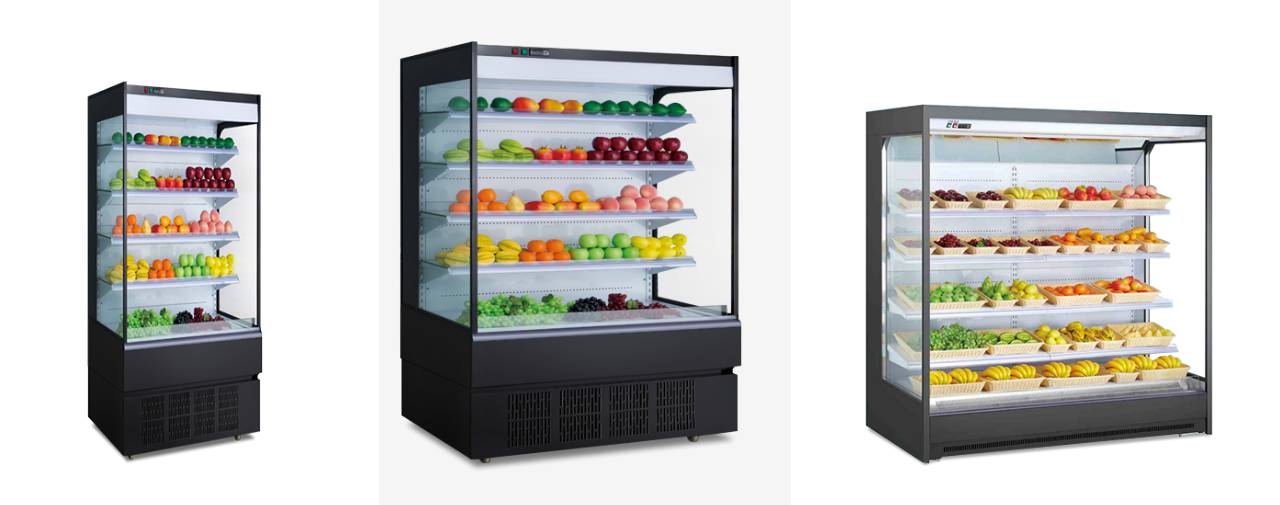
Recommendation 1: HG(10A-20A) Open Display Fridge
- Type: Fan‑cooled, frost‑free
- Temperature: 2‑10°C (36‑50°F)
- Usable capacity: approx. 350L – 910L (12‑32 cu ft)
- Energy consumption: approx. 10‑30 kWh/day
- Ideal for: Supermarkets, grocery stores, farmers' markets – fruit and vegetable storage & display
- Pros: Precise temperature control, excellent LED lighting, large capacity, available with or without doors
- Cons: Not suitable for home use
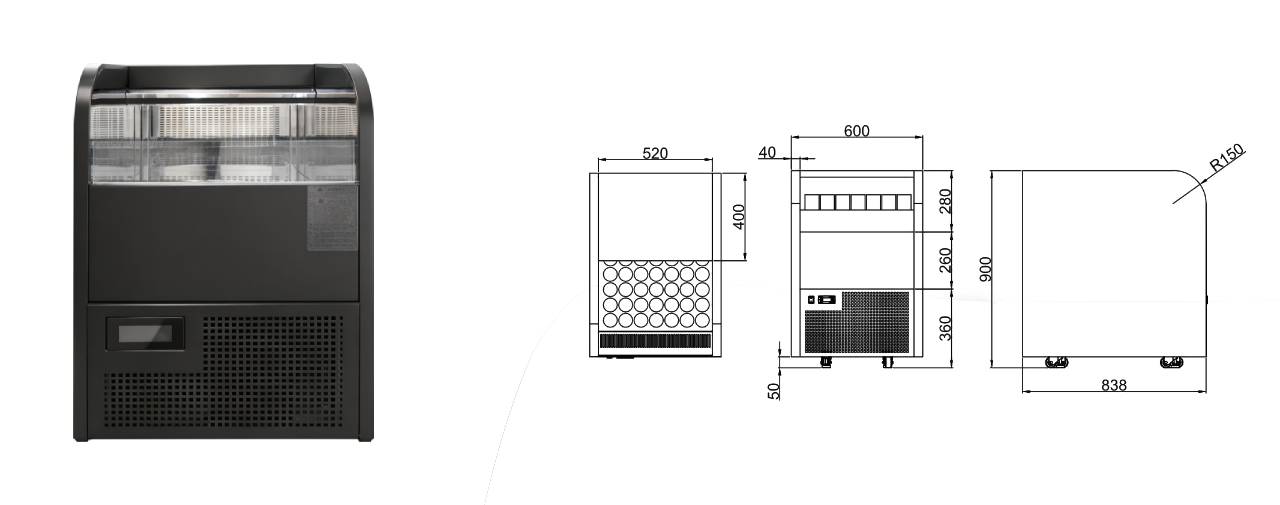
Recommendation 2: TOC-85 Undercounter Refrigerator
- Type: Fan‑cooled
- Usable capacity: approx. 85L (3 cu ft)
- Ideal for: Beverage storage – about 50‑60 bottles
- Pros: Attractive design, good insulation, easy to use, includes casters
- Cons: Slightly heavy
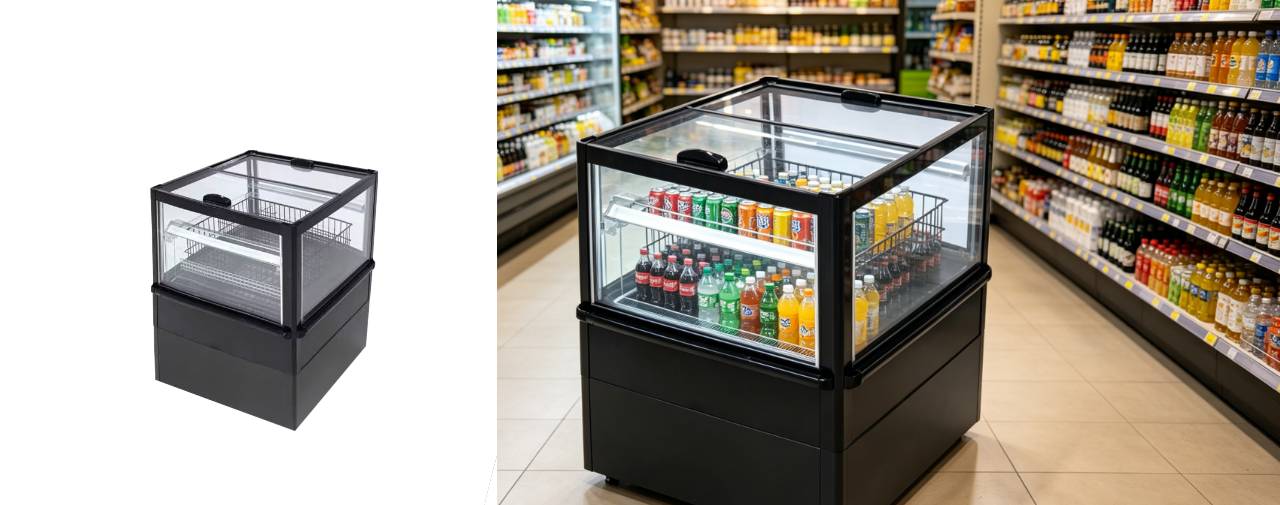
Recommendation 3: MTD Top‑Open Display fridge
- Type: Fan‑cooled
- Usable capacity: approx. 110L‑140L (3.9‑5 cu ft)
- Ideal for: Convenience stores, chain stores, supermarkets
- Pros: Low energy consumption, modern look, quiet operation
- Cons: Not ideal for home use
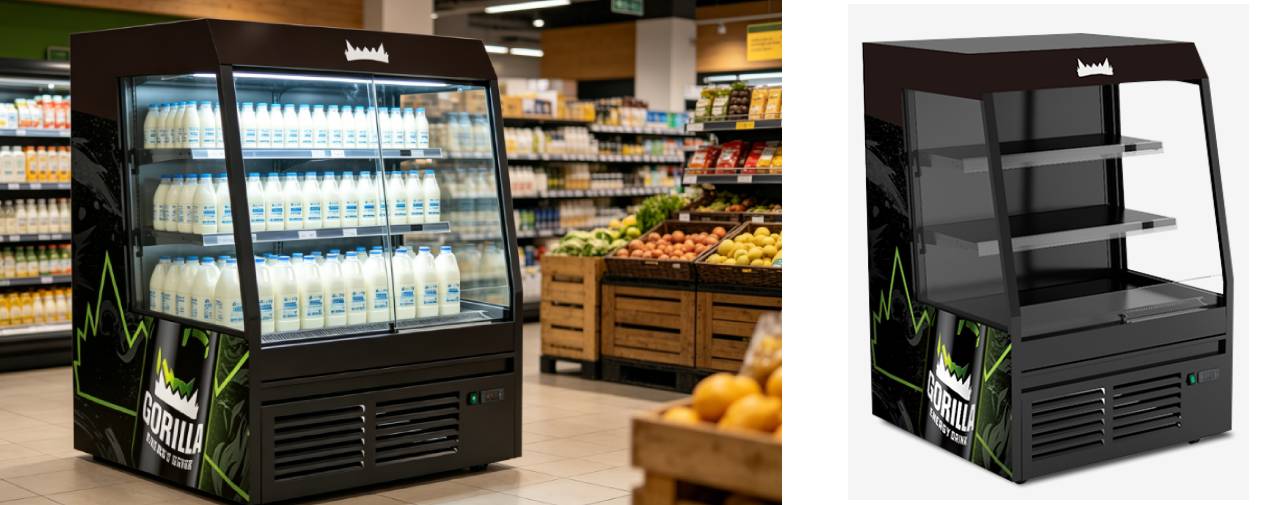
Recommendation 4: ODC‑120 Front‑Open Refrigerator
- Type: Fan‑cooled
- Usable capacity: approx. 120L (4.2 cu ft)
- Ideal for: Supermarkets, department stores
- Pros: Very affordable, great cooling performance
- Cons: Not suitable for home use
5. Frequently Asked Questions
Q1: Are open display fridges really that power‑hungry?
A: Compared to closed‑door fridges, yes, they consume more electricity, but the difference isn't as extreme as you might think. For example, a 1.5‑meter (5‑foot) open display fridge typically has a power draw of around 910W and consumes about 10‑15 kWh per day. Actual consumption depends on the ambient temperature in your area. Overloading or running in a hot environment will definitely spike usage.
Q2: Can I use an open display fridge outdoors or in a semi‑open area?
A: Not recommended. The optimal ambient temperature is below 25°C (77°F). If placed outdoors or in a hallway without air conditioning, cooling performance drops dramatically, the compressor runs non‑stop, and electricity bills can double.
Q3: How many times a day should I restock?
A: It depends on shelf capacity and sales speed. Generally, restocking once in the morning and once in the evening is sufficient. Some high‑end models have a low‑stock alert, but that feature is not yet common.
Q4: Does it need daily cleaning?
A: For fruits and vegetables, we recommend wiping the interior and shelves with a soft cloth after closing each day, and doing a deep clean once a week (unplug the unit and use a mild detergent). Keeping it clean not only extends the life of the fridge but also makes your products look more appealing. For beverages, cleaning once a week is usually enough.
Q5: Where do you ship from?
A: Typically, custom orders are shipped from China. For small units or accessories, air freight is available.
Single‑temperature display fridges are more in demand for commercial spaces like malls and supermarkets, while dual‑temperature models are often more suitable for home use. Choose according to your specific needs.
Most popular More «
-
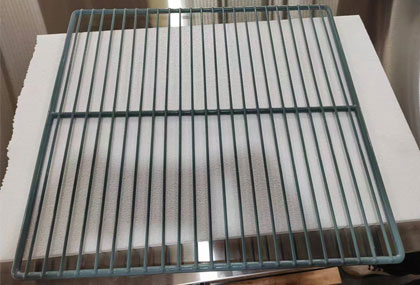
Selection Guide for Shelving Systems of Refrigerated Beverage Display Cabinets
-
How to Control the Procurement Cost of Open Refrigerated Display Cabinets for Supermarkets
-
Air vs Direct Cool Cake Cabinets Advantage and Disadvantage
-
How to Choose an Open Display Cooler for Your Fruit Store?
-
What Is the Standard Temperature for Dessert Display Cabinets?
-
Top Compact Upright Display Cooler for Retail Businesses
-
SM15A Commercial Slush Machine Specification
-
Commercial Pastry Display Case Buying Guide for Bakeries & Cafés
-
Cooluma Ice Machines for Seafood Sections in Supermarkets
-
Cooluma Turnkey Coffee Shop Solution