









Should the cake be refrigerated or frozen? 90% of people are wrong!
Got a delicious cream cake you can't finish and just toss it in the fridge? Want to stock up on chiffon cakes for breakfast and plop them straight into the freezer? Truth is, many people have fallen into cake storage traps—cream hardens and clumps after refrigeration, while freezing makes cakes dry and tough, ruining perfectly good desserts.
So should cakes go in the fridge or freezer? The core answer is: it depends on the cake type, storage duration, and your texture preferences. Today, we'll break down cake storage methods for different scenarios—from scientific principles to practical guides—so you never waste another slice of delicious cake.
First, understand: Why can't cake storage be a one-size-fits-all solution?
Cake's core ingredients are flour, eggs, sugar, fats, and various fillings (cream, mousse, jam, etc.). Each component has a completely different tolerance for temperature. This is the key difference between when refrigeration and freezing are appropriate:
Refrigeration (0-4°C) primarily slows bacterial growth and maintains short-term freshness, but low temperatures cause fats to solidify and moisture to gradually evaporate; Freezing environments (below -18°C) can lock in moisture and flavor long-term, but improper storage may cause “freezer burn,” compromising the cake's texture.
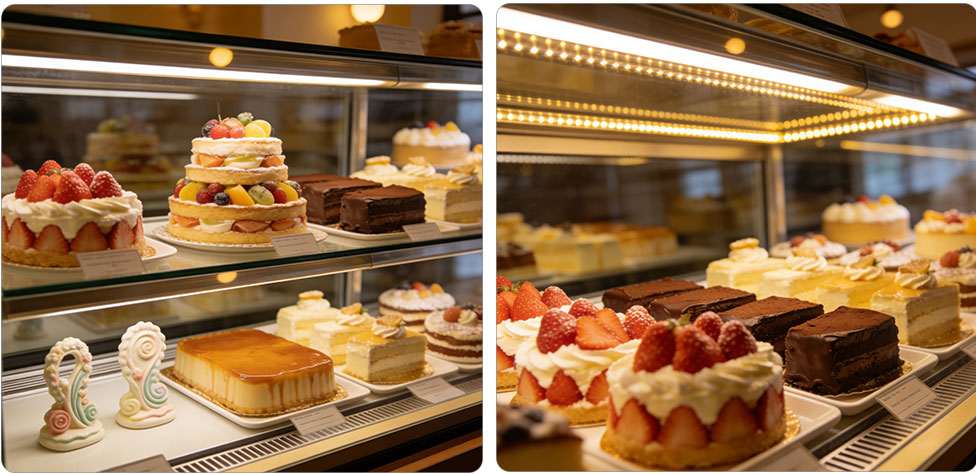
Simply put: Refrigerate cakes for short-term consumption; freeze them for long-term storage. Pay attention to refrigeration temperatures for cream and mousse cakes. Chiffon and sponge cakes require proper thawing after freezing.
Refrigeration vs. Freezing: A Complete Analysis of Applicable Scenarios and Pros/Cons
| Storage Method | Applicable Scenarios |
Advantages
|
Disadvantages |
Precautions
|
|---|---|---|---|---|
| Refrigeration (0-4°C) | 1. Cakes containing perishable fillings such as cream cakes, mousse cakes, and cheesecakes; 2. Short-term storage (consume within 1-3 days); 3. Pre-sliced cakes | 1. Maintains the delicate texture of cream and mousse, preventing melting; 2. Simple to use, no complex wrapping required; 3. Easy to thaw—simply remove and let sit for 10 minutes before serving | 1. Short storage life—bacteria may grow after 3 days; 2. Cake base gradually loses moisture, becoming dry and hard; 3. Some cream may develop slight clumping |
1. Avoid placing near refrigerator vents to prevent rapid moisture evaporation; 2. Store in an airtight container to prevent odor absorption (leftovers and fruit in the refrigerator can easily permeate).
|
| Freezing (below -18°C) | 1. Cake bases without perishable fillings (e.g., chiffon cake, sponge cake, pound cake); 2. Requires long-term storage (1-3 months); 3. Pre-made cakes (e.g., batch-baked by enthusiasts) |
1. Extended storage locks in moisture and flavor; 2. Ideal for bulk stockpiling to save time; 3. Freezing firms the cake base, preventing deformation during frosting.
|
1. Improper thawing may result in dry, crumbly texture or separation; 2. Cakes containing fresh cream or fruit are not suitable for direct freezing (compromises texture); 3. Strict sealing is required to prevent freezer burn | 1. Must be double-wrapped with plastic wrap + airtight container; 2. Thaw slowly at room temperature; avoid rapid thawing at high temperatures |
Storage Guide for Different Cake Types: Tailored Methods to Preserve Flavor
Cakes vary significantly in structure and ingredients, requiring customized storage approaches. Below are specific guidelines for six common cake types:
1. Buttercream Cakes (Animal-Based/Vegetable-Based Buttercream)
This is the most common cake type, yet it faces the most storage misconceptions. Core principle: Refrigerate first; direct freezing is not recommended.
Animal-based cream has a low melting point (around 30°C/86°F) and easily melts or spoils at room temperature. Refrigeration preserves its smooth texture. Specific steps: Completely wrap the cake box with plastic wrap (to prevent odor transfer and moisture loss). Place it in the middle shelf of the refrigerator compartment (away from the freezer vent). Storage duration: 1-2 days.
Note: If you wish to store leftover cream cake for more than 2 days, separate the cake base from the cream first. Freeze the cake base separately. For un-whipped cream, refrigerate it. If the cream is already whipped, consume it promptly and avoid freezing (freezing causes the cream to separate and form lumps, irreversibly compromising its smooth texture).
2. Mousse Cakes / Cheesecakes
These cakes contain significant amounts of gelatin and dairy products, making them temperature-sensitive. Refrigeration is essential, while freezing extends shelf life.
Mousse Cakes: Refrigerate for 3-4 days, sealed to prevent moisture evaporation. For longer storage (within 1 month), freeze. Before serving, transfer from the freezer to the refrigerator 2-3 hours in advance for slow thawing. Texture will largely restore to its original state.
Cheesecake: Rich cheesecakes, due to their high fat content, can be refrigerated for 5-7 days. Light cheesecakes, with higher moisture content, are best consumed within 3 days. Long-term freezing is not recommended, as it causes the cheese to harden and become dry.
3. Chiffon Cake/Sponge Cake (Unfilled)
These cakes feature a soft, fluffy texture with high moisture content. They can be stored short-term in the refrigerator or long-term in the freezer, making them the most suitable type for stockpiling.
Short-term storage (within 3 days): Place in an airtight container in the refrigerator, avoiding compression. If it feels slightly dry after removal, lightly mist the surface with water and microwave for 10 seconds to restore softness.
Long-term storage (1-3 months): First cut the cake base into suitable portions. Wrap tightly with 2-3 layers of plastic wrap (ensuring no gaps), then place in an airtight container and store in the freezer. To thaw, no need to remove in advance. Simply transfer the sealed cake base from the freezer to the refrigerator. Thaw for 4-6 hours, or leave at room temperature for 1-2 hours. The texture and taste will be nearly indistinguishable from freshly baked.
4. Pound Cake/Rich Butter Cake
Pound cake has high fat and sugar content, offering relatively long shelf life. It can be stored refrigerated or frozen, though freezing is more recommended.
Refrigerated Storage: Seal and store in the refrigerator for 7-10 days. Frozen Storage: Wrap in plastic wrap, place in an airtight container, and freeze for over 3 months. After thawing, reheat in the oven for 5 minutes for a crispier, more aromatic texture.
5. Fruit-Filled Cakes
Fresh fruits (like strawberries, mangoes, blueberries) have high water content and become mushy when frozen, affecting texture. Therefore, cakes containing fresh fruit are not recommended for freezing.
When refrigerating, ensure the fruit layer faces upward to avoid crushing. Storage time is 1-2 days. If the fruit on the cake has already been cut, it's best to remove and consume the fruit separately first. Store the remaining cake base according to the corresponding storage method.
6. Mille-Feuille
Mille-Feuille consists of alternating layers of pastry and cream. Its texture relies on the softness of the pastry and the smoothness of the cream. Refrigeration is preferred; short-term freezing is possible.
Refrigerated Storage: Seal and store in the refrigerator for 2-3 days. For freezing, cut into small portions, wrap tightly, and freeze for no longer than 1 month. Consume promptly after thawing to prevent the pastry from absorbing moisture and becoming soggy.
Avoid These Pitfalls: Avoid these 3 storage mistakes!
1. Placing unsealed cake directly in the refrigerator: Odors from the fridge can permeate the cake, while moisture loss causes it to become dry and hard. Correct method: Whether refrigerating or freezing, always use both plastic wrap and an airtight container for double protection.
2. Freezing cream cakes directly: Animal-based whipped cream separates and forms lumps when frozen. Even after thawing, it cannot regain its smooth texture, severely affecting the eating experience. Correct method: For long-term storage, separate the cake base from the cream first.
3. Quick thawing of frozen cakes: Using high-heat microwaves or exposing cakes to direct sunlight causes uneven thawing—resulting in a soft outer layer with icy crumbs inside, or a completely dry and tough texture. Correct method: Thaw slowly in the refrigerator or at room temperature.
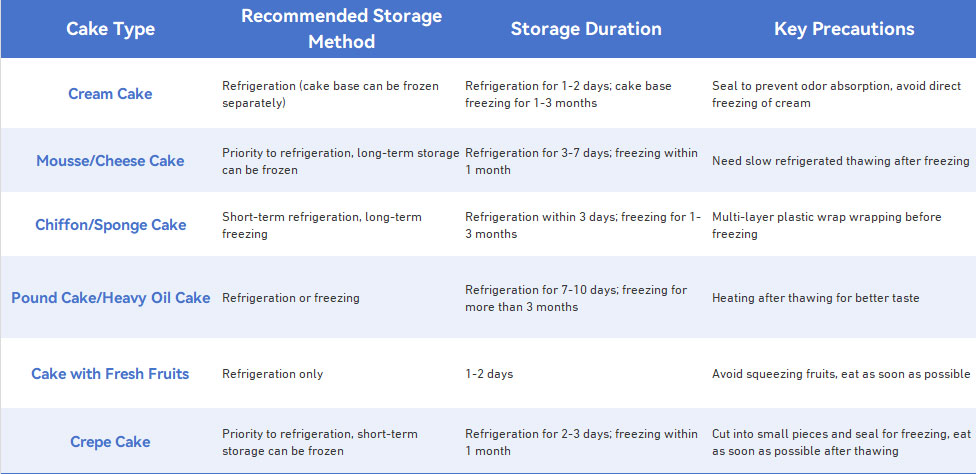
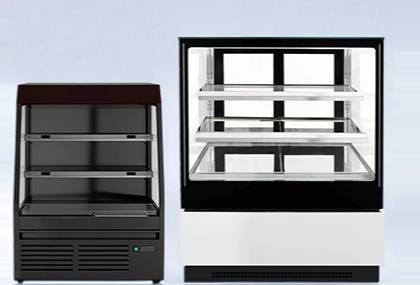
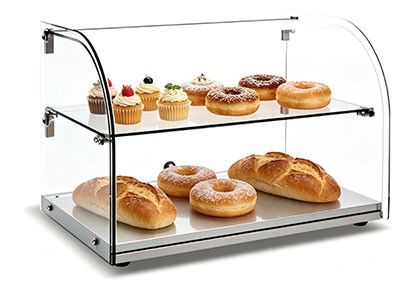
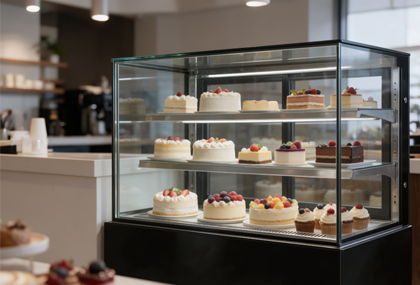
The core principle of cake storage is “matching needs”: refrigerate for short-term indulgence to preserve freshness; freeze for long-term storage to lock in original flavor. Select the appropriate method based on cake type, ensure proper sealing, and follow correct thawing procedures to maximize flavor retention.In addition, do not overlook an important point: try to choose a display cabinet specifically designed for cakes, as it can offer more advantages in terms of temperature control, storage, and other aspects.



Most popular More «
-
Air vs Direct Cool Cake Cabinets Advantage and Disadvantage
-
How to Choose an Open Display Cooler for Your Fruit Store?
-
What Is the Standard Temperature for Dessert Display Cabinets?
-
Top Compact Upright Display Cooler for Retail Businesses
-
SM15A Commercial Slush Machine Specification
-
Commercial Pastry Display Case Buying Guide for Bakeries & Cafés
-
Cooluma Ice Machines for Seafood Sections in Supermarkets
-
Cooluma Turnkey Coffee Shop Solution
-
How To Choose Commercial Display Freezer For Ice Cream Shop
-
Solutions to Glass Fogging & Water Dripping for Café Cake Display Fridges