









Guide to Floor-Standing Refrigerated Cabinets for Coffee Shops
In the daily operations of a coffee shop, have you encountered issues with floor-standing refrigerated cabinets such as high power consumption and inconvenient operation? Many new shop owners select models blindly without taking their store’s size and layout into account, and these problems are quite prevalent. Below is an analysis of their applications and a practical selection guide.
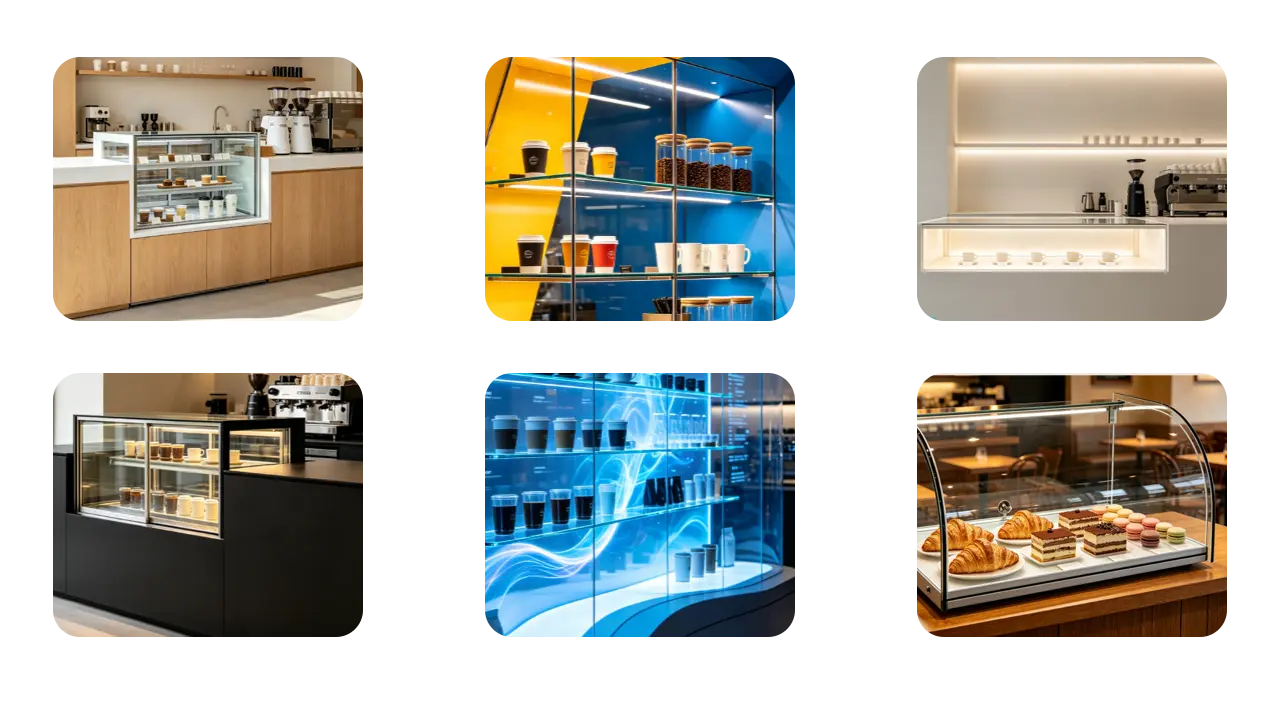
Match Cabinet Type to Store Functions
Floor-standing refrigerated cabinets for coffee shops fall into two categories: front-of-house glass display models and back-of-house enclosed storage models. Designed for entirely different scenarios, they serve distinct functions and should never be used interchangeably. Placed in customer-facing areas, front-of-house cabinets prioritize visual appeal and visibility to showcase desserts, Basque cheesecakes, mousses and bottled cold brew coffee. Back-of-house models require no display function; they focus on high-capacity storage for fresh milk, heavy cream, fruit syrups and pre-prepared coffee liquid, with an emphasis on energy efficiency and storage volume.
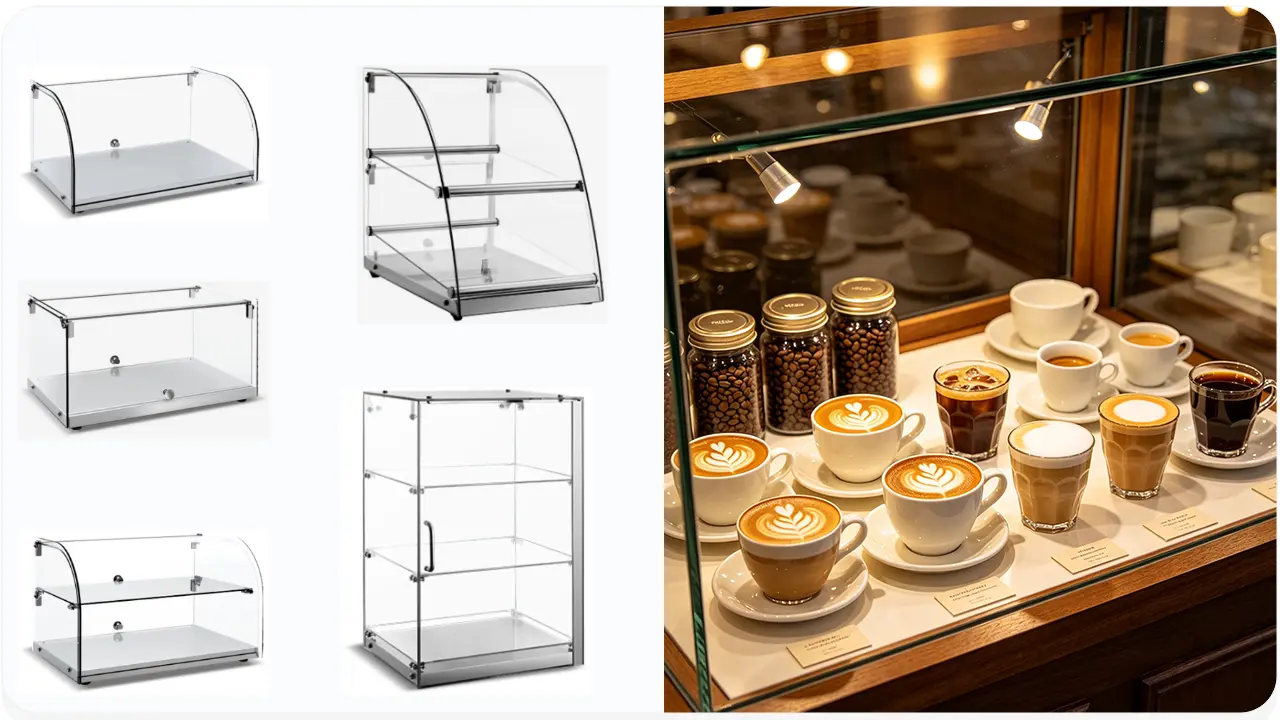
It is also critical to follow the industry-standard temperature range: the internal temperature of the refrigerated cabinet must be steadily maintained at 1°C to 4°C, the optimal preservation range for dairy products and desserts. Temperatures above 6°C drastically increase the risk of mold growth and spoilage in desserts, while temperatures below 0°C will cause cream to freeze and crack, compromising both flavor and appearance. When making a purchase, be sure to select units equipped with a digital precision temperature control panel that supports one-touch constant temperature adjustment.
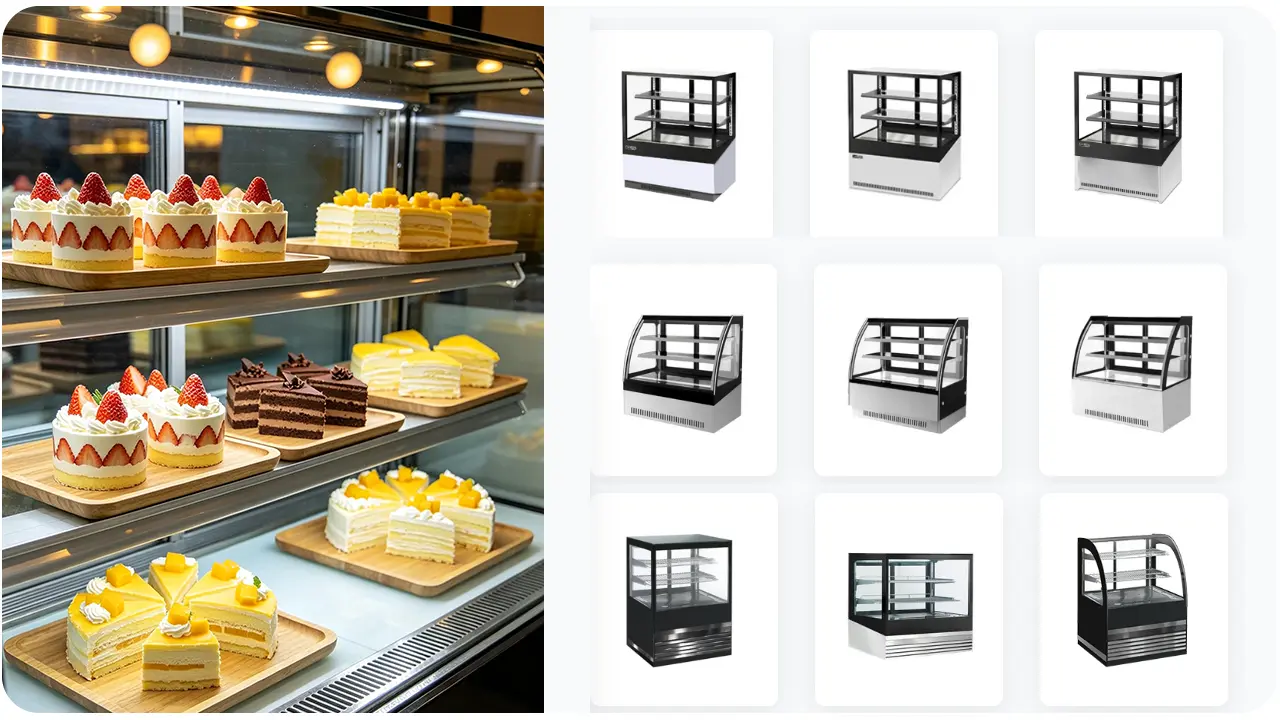
Air-Cooled vs. Direct-Cooled: Opt for Air-Cooled Systems in Coffee Shops
Commercial floor-standing refrigerated display cabinets use either direct cooling or air cooling technology. Given the frequent door openings typical of coffee shop operations, the recommendation is clear: all coffee shops should prioritize frost-free air-cooled models.
Direct-cooled cabinets rely on natural heat transfer through cooling pipes. While they are affordable and energy-efficient, they have a critical flaw: frost builds up rapidly inside, requiring regular manual defrosting. Accumulated frost obstructs the view of desserts, and uneven temperature distribution inside the cabinet means desserts near the cooling pipes are prone to freezing damage. Additionally, temperature recovery is extremely slow after frequent door openings. This type is only suitable for low-traffic static storage in back-of-house areas, and is entirely unsuitable for front-of-house display.
Air-cooled cabinets utilize ducted circulating refrigeration to maintain uniform temperatures throughout the interior. They are completely frost-free and eliminate the need for manual defrosting, and can quickly restore the set temperature after each door opening — perfectly suited to the frequent cabinet access during coffee shop peak hours. Paired with a hydrophilic film evaporator, they deliver stable cold air circulation without drying out the cream on cake surfaces, preserving the visual quality of desserts to the maximum extent. This is the standard configuration for coffee shop use.
Key Details That Define Display Cabinet Aesthetics and Functionality
For front-of-house transparent glass cabinets, small details directly impact customer perception. Three non-negotiable features are essential:
First, electrically heated auto-defogging glass. Coffee shops experience significant indoor temperature fluctuations. After door openings, ordinary single or double-pane glass fogs up instantly, completely blocking customers’ view of the desserts inside. Electrically heated defogging glass maintains a crystal-clear surface around the clock without manual wiping, ensuring uninterrupted service efficiency.
Second, premium ultra-clear tempered double-pane insulating glass is the preferred choice. Compared to standard glass, it delivers 30% higher light transmittance for more accurate, true-to-life color rendering of desserts. It also provides superior thermal insulation, reducing cold-heat air exchange and lowering energy consumption. The double-pane structure further dampens internal refrigeration noise, preventing disturbance to customers in the shop.
Third, built-in waterproof warm-white LED lighting. Cool white light should be avoided — warm lighting enhances the appetizing appearance of cakes, pastries and beverages. Commercial-grade waterproof lights are engineered to withstand the high-humidity refrigerated environment for extended durability, and produce minimal heat output so they do not raise the internal cabinet temperature.
It is important to note that refrigerated cabinets operate non-stop 365 days a year, so operating noise, temperature stability and load tolerance are critical performance factors. High-quality models can reduce energy consumption by at least approximately 30% over long-term use. For refrigeration piping, insist on all-copper tube evaporators and avoid aluminum alternatives. Copper tubes offer excellent corrosion resistance, high thermal conductivity and a service life of over 5 years. Aluminum tubes are prone to oxidation and refrigerant leakage, and will likely require repairs within the first year of operation. For the interior lining, always choose food-grade 304 stainless steel — it resists staining and corrosion from coffee and milk residues, wipes clean easily with a cloth, and complies with catering hygiene inspection standards.
Size Recommendations by Store Area
- Neighborhood small shops (20–40㎡): A 1.2-meter single-door floor-standing display cabinet with a capacity of 220–280L is recommended. It accommodates 6–8 daily dessert varieties plus a small selection of bottled beverages, without encroaching on front-of-house aisle space.
- Standard commercial district coffee shops (40–80㎡): A 1.5-meter double-door model with a capacity of 350–420L is recommended. It enables organized layered storage of desserts, cold brew and fresh milk with clear zoning.
- Large-format stores / integrated bakery & coffee shops: A 1.8-meter double-door or triple-door model is recommended. Its generous capacity supports a wide range of dessert varieties and meets peak-period stocking demands.
To summarize, a quiet, energy-efficient floor-standing refrigerated cabinet operates without noise disturbance and delivers long-term power savings, while official safety certifications provide reliable quality assurance. Always select the appropriate size based on your store area and sales volume. The core advantages of floor-standing designs include ample storage space for bulk ingredient stocking, a space-efficient vertical footprint, and convenient layered access for item retrieval.
Most popular More «
-
What Is the Standard Temperature for Dessert Display Cabinets?
-
Top Compact Upright Display Cooler for Retail Businesses
-
SM15A Commercial Slush Machine Specification
-
Commercial Pastry Display Case Buying Guide for Bakeries & Cafés
-
Cooluma Ice Machines for Seafood Sections in Supermarkets
-
Cooluma Turnkey Coffee Shop Solution
-
How To Choose Commercial Display Freezer For Ice Cream Shop
-
Solutions to Glass Fogging & Water Dripping for Café Cake Display Fridges
-
How to Optimize Packaging for Commercial Refrigerator Spare Parts to Reduce Import Costs
-
Cooluma Unveils New Commercial Ice Makers, Beverage Dispensers and Slush Machines