









What are the factors that determine the price of a display cabinet?
I. Core Functionality: Refrigeration/Ambient Temperature Attributes Directly Set the Pricing Benchmark
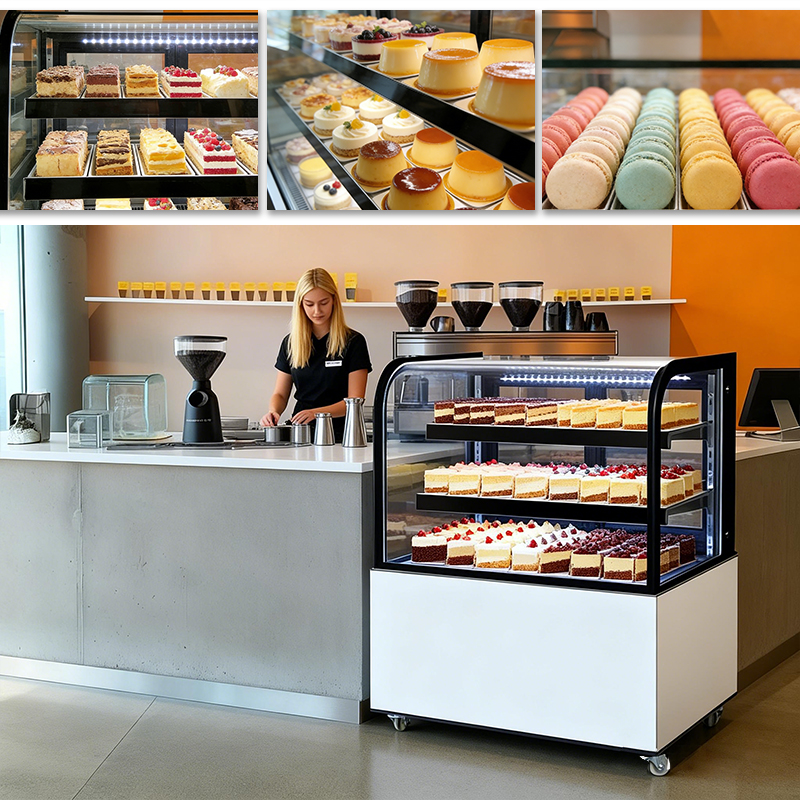
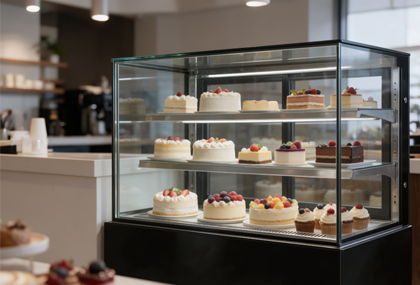
The core functional differences in display cabinets form a “watershed” for pricing, especially for categories like cake display cases and food cabinets that directly impact food preservation. Refrigeration requirements significantly drive up costs. Functionally, they fall into two main categories:
Refrigerated cabinets are the mainstream and higher-priced type. For example, cake display cases must maintain a stable temperature of 2-8°C to prevent cream from melting and cakes from spoiling; Sushi counters and seafood display cases in Japanese restaurants demand precise temperature control, with some also requiring humidity maintenance.
These units necessitate comprehensive refrigeration systems, where core components like compressors and evaporators account for significant costs. Standard single-door refrigerated cake display cases typically range from 2,500 to 8,000 yuan, while large four-door food refrigeration cabinets can reach 12,000 to 30,000 yuan.
Ambient display cabinets are significantly more affordable, primarily used for showcasing non-refrigerated items like bread, pastries, or cake models. Without requiring refrigeration systems, their costs are substantially reduced. For instance, a 1.2-meter ambient cake model display cabinet costs around ¥2,488, while a refrigerated cake cabinet of the same size costs at least double. Convenience store ambient snack display cabinets feature simpler structures, typically priced between 1,500 and 5,000 yuan.
II. Refrigeration Configuration: Direct Cooling vs. Air Cooling – Price Difference Can Be Half
For refrigerated cake cabinets and food display units, the refrigeration method is the core factor determining price. The two mainstream approaches show distinct differences in cost and user experience:
Direct cooling systems feature simpler structures, relying on evaporators for direct heat dissipation and cooling. They are more affordable, with standard countertop direct-cool sushi cabinets and cake display cases typically priced between 2,000 and 3,000 yuan. However, their drawbacks are pronounced: significant temperature variations within the cabinet, frequent frost buildup requiring manual cleaning, making them suitable for small shops with limited budgets.
Air-cooled models use fan-circulated refrigeration, delivering uniform temperatures with minimal frost buildup and automatic defrosting. This provides superior preservation—for instance, high-end air-cooled cake display cases prevent localized drying of cakes, while sushi display cases maintain the texture of sashimi like salmon. However, air-cooled systems feature more powerful compressors and complex structures, naturally increasing costs. A similarly sized air-cooled cake display cabinet costs 30%-50% more than a direct-cooled model. For instance, a 1.5-meter air-cooled cabinet costs around ¥6,000, while a direct-cooled version is only about ¥4,000.
III. Size and Capacity: Larger Models Cost More, Custom Sizes Double the Price
Display cabinet dimensions directly correlate with material usage and refrigeration load, representing a linear factor in pricing. Common cake and food display cabinets are categorized by size into miniature, small, medium, and large, with distinct price tiers:
Miniature/countertop models suit small bars or street stalls. For instance, a 60-80cm-wide tabletop cake display cabinet costs between 800-3000 yuan; Small single-door models (approx. 1m wide) suit neighborhood bakeries, with refrigerated versions priced between ¥2,500–8,000; Medium double/triple-door models (1.2–1.8m wide) are mainstream units commonly used in cake shops and Japanese restaurants, priced at ¥5,000–15,000; Large four-door or larger models (over 1.8m wide) suit supermarkets and high-end hotels, priced between ¥12,000 and ¥30,000.
Crucially, custom designs—such as irregularly shaped cake display cases or extra-long food display cabinets (over 3m in length)—require bespoke molds and refrigeration system adjustments, doubling the cost to typically ¥20,000–¥50,000 or higher.
IV. Materials and Craftsmanship: Cost Differences in Details, Durability Determines Long-Term Value
Materials represent the key “hidden costs” of display cabinets, especially for cake and food cabinets that must balance aesthetics and durability. Material differences directly impact price and lifespan:
For frame materials, 304 stainless steel represents the premium choice—corrosion-resistant and easy to clean—commonly used in high-end cake display cases and food refrigerators, naturally commanding a higher price. In contrast, spray-painted steel sheets or laminated steel sheets are lower-cost options, frequently used in standard ambient temperature cabinets, reducing costs by 20%-30%. Glass selection also matters. Standard glass is cheapest but offers poor safety. Tempered glass, shatterproof glass, or Low-E coated glass (reducing condensation and improving insulation) incur higher costs. For instance, a cake display cabinet with Low-E glass costs 1000-2000 yuan more than a standard glass model.
Craftsmanship details also impact pricing. For instance, stainless steel shelves in cake display cases cost 300-500 RMB more than glass shelves. Sliding doors with dampers are pricier than standard side-opening doors. Models featuring casters and adjustable shelves also command higher prices.
V. Brand and Feature Upgrades: Premium Pricing Reflects Assurance and Experience
Price differences stemming from brand variations fundamentally reflect disparities in quality assurance and service. Imported brands like Sanyo and Panasonic, or domestic brands such as Xingxing and Aokema, offer more stable product quality and longer warranty periods for core components like compressors (e.g., 3-year compressor warranty), commanding 20%-50% higher prices than niche brands. Emerging domestic brands or small manufacturers offer more affordable options, but their after-sales service networks may be less developed.
Functional upgrades are the primary drivers of price premiums: LED lighting strips cost 300-500 yuan more than standard fluorescent tubes but offer energy efficiency, softer illumination, and enhanced display effects for cakes and food items; premium cake display cabinets with humidity control maintain optimal moisture levels, commanding over 2000 yuan more than basic models; Features like smart temperature control and remote monitoring appear only in premium models, further driving up costs.
VI. Procurement Channels: Direct Sales vs. Agents, Price Differences Reach 10%-20%
Finally, procurement channels also impact final pricing. Direct manufacturer sales bypass distributors, offering relatively lower prices; while physical specialty stores and distributor agents add service fees, resulting in higher costs. Online e-commerce platforms (JD.com, Tmall) frequently run promotions, pricing 5%-10% lower than offline stores—but note additional shipping and installation fees. For large display cabinets, upstairs delivery and installation/commissioning fees may range from 500-2000 yuan.
Don't blindly chase high prices for cake display cases or food cabinets. Understand controllable costs. For high-end bakeries, opt for models with forced-air cooling and 304 stainless steel construction to ensure quality. Remember the logic: “Functionality sets the baseline, configuration determines price differences, and materials dictate durability.” This approach helps avoid price traps and select products with suitable value for money.
Most popular More «
-
Air vs Direct Cool Cake Cabinets Advantage and Disadvantage
-
How to Choose an Open Display Cooler for Your Fruit Store?
-
What Is the Standard Temperature for Dessert Display Cabinets?
-
Top Compact Upright Display Cooler for Retail Businesses
-
SM15A Commercial Slush Machine Specification
-
Commercial Pastry Display Case Buying Guide for Bakeries & Cafés
-
Cooluma Ice Machines for Seafood Sections in Supermarkets
-
Cooluma Turnkey Coffee Shop Solution
-
How To Choose Commercial Display Freezer For Ice Cream Shop
-
Solutions to Glass Fogging & Water Dripping for Café Cake Display Fridges