









Solutions to Glass Fogging & Water Dripping for Café Cake Display Fridges
To solve fogging, condensation, and dripping on coffee shop refrigerated display case glass, you need to address indoor temperature, equipment features, dehumidification, and hardware optimization together.

First, distinguish between two types of condensation:
Interior condensation (on the glass surface facing inside the cabinet) → humidity / temperature issue inside the cabinet
Exterior condensation (water droplets on the outside surface visible to customers) → ambient temperature difference + anti-sweat system failure (this accounts for 90% of cases in coffee shops)
|
Most commercial upright pastry and dessert display cases on the market: the outer glass surface fogs up, feels wet, and drips water downward. |
1. Understand the root cause first
Air contains moisture; when the cold glass surface temperature falls below the ambient dew point, moisture condenses directly into water droplets.
Common triggers in coffee shops:
- Air conditioning set too low / AC vent blowing directly onto the display case glass
- Humid store environment (rainy days, southern rainy seasons, coastal high-humidity cities)
- Display case built-in electric anti-fog heating wire (sweat-prevention heater) malfunctioning / not turned on
- Frequent door openings, continuous exchange of hot and cold air
- Cabinet placed near entrance doors, air vents, or coffee machine steam areas
2. Tiered solutions
Level 1: Immediate action – zero-cost daily adjustments
-
Adjust store AC – do not let cold air blow directly onto the display glass
Cold air blowing directly onto the glass continuously lowers its surface temperature – this is the #1 culprit in coffee shops!
Redirect AC louvers upward / use deflector shields; do not place the display case directly under or facing the AC outlet. -
Keep away from steam sources
Do not place it right next to coffee machines, hot water taps, or dishwashing areas. Coffee machine steam diffusion significantly raises local air humidity and worsens condensation. -
Reduce frequent door opening/closing
Each opening lets in a large amount of warm, humid air, increasing the temperature differential and instantly fogging up the glass.
- Batch your product retrieval; avoid opening the door repeatedly for single small items.
-
Set cabinet temperature reasonably (do not set too low)
Standard for desserts and cakes: 2°C – 6°C
Do not go below 0°C; lower temperatures make condensation worse.
|
Note: Do not set the temperature extremely low in pursuit of freshness – it actually increases condensation, energy consumption, and glass aging. |
Level 2: Equipment function check
Commercial cake display cases have anti-sweat heating wires (defogging/heater elements) embedded in the glass interlayer.
Function: gently warm the glass so its surface temperature approaches room temperature, preventing moisture condensation.
Troubleshooting steps:
-
Check the control panel: look for a "DEMIST / ANTI-FOG / HEAT" button or switch
Turn on anti-fog heating mode; some models have "high/low" settings – switch to high during humid weather. - After turning it on, wait 30–60 minutes and observe the effect (it won't work in seconds)
-
If heavy condensation persists after turning it on:
Likely causes: ① heating wire burned out; ② temperature sensor faulty; ③ internal wiring disconnected
A technician must inspect the electric heating circuit (must be a qualified electrician or refrigeration specialist – do not disassemble the glass yourself! Tempered glass can easily shatter)
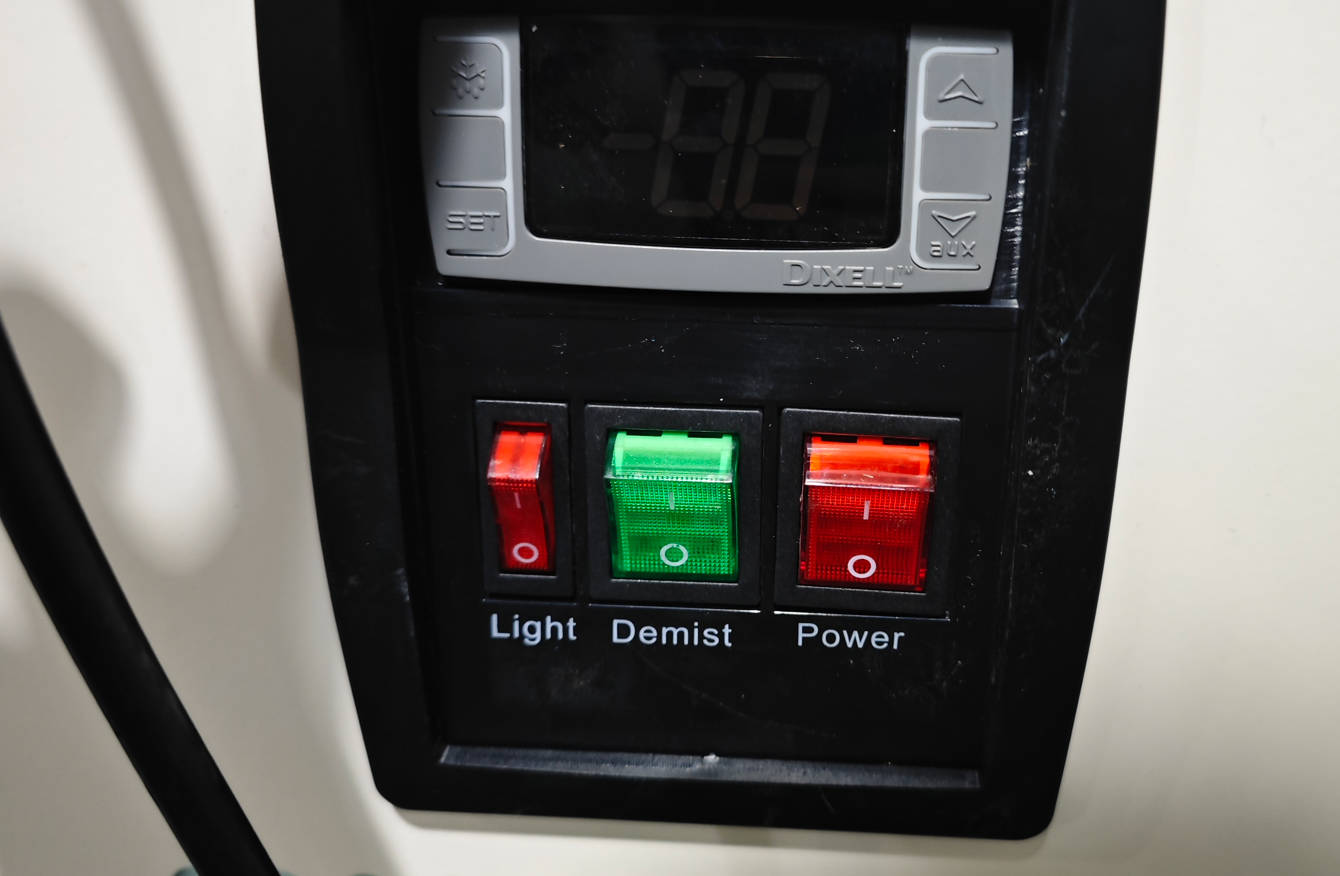
|
Many used or older cake display cases: the previous owner disconnected the anti-sweat heating wire to save electricity, and the new buyer ends up with persistent fogging – this is a common pitfall! |
Level 3: Ambient dehumidification (essential for coffee shops in southern / coastal rainy regions)
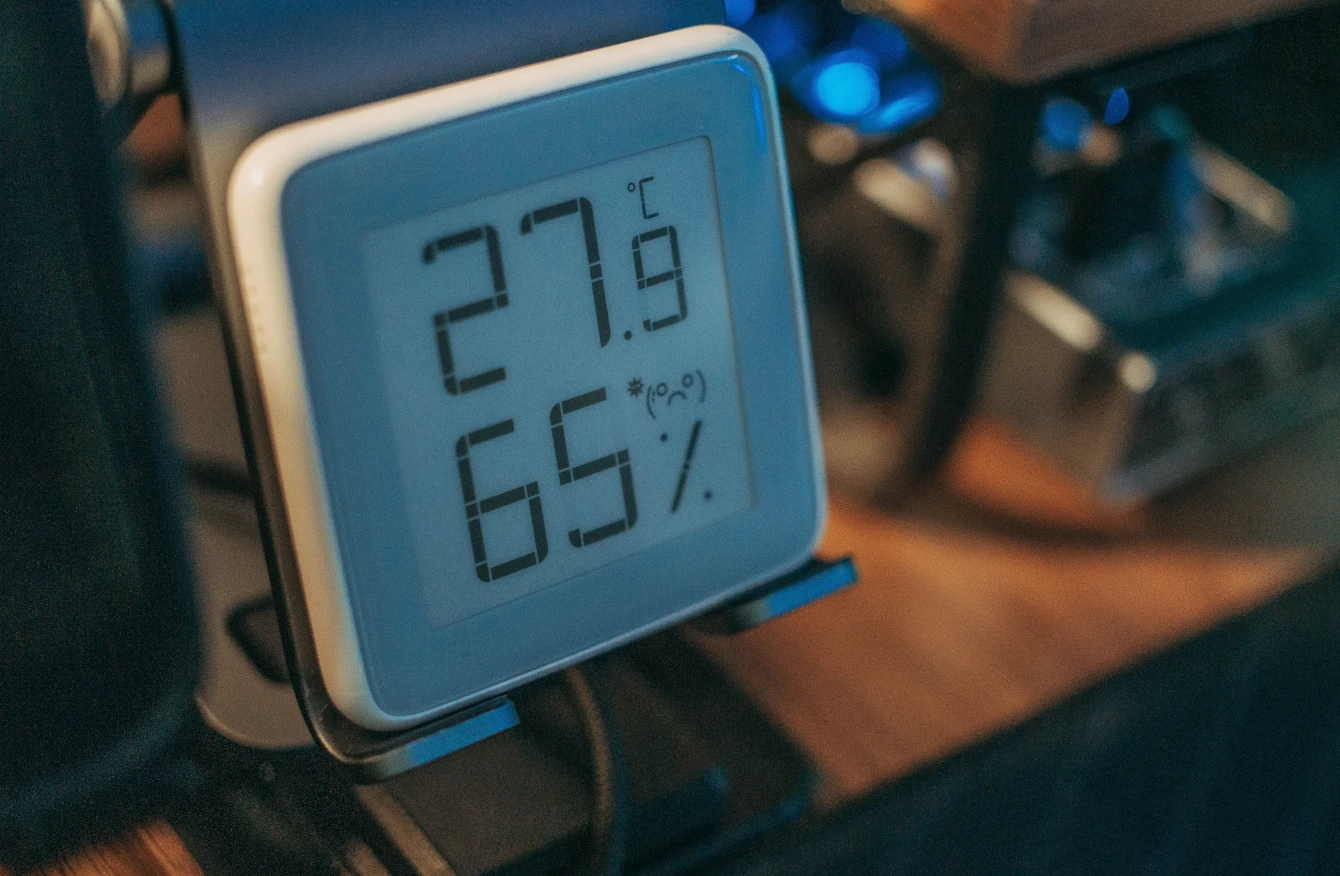
When indoor humidity is too high (above 65% RH), any parameter adjustments will have limited effect.
Options:
-
Small industrial dehumidifier (placed near the display case area)
Target: stabilize store relative humidity at 55%–62% RH
|
Do not blow air directly onto the glass; slow, circulating dehumidification works best. |
- During rainy or monsoon seasons, keep doors and windows closed; do not keep them open for ventilation – outdoor humid air will continuously flood in and make the problem unsolvable.
Level 4: Hardware upgrades & selection / retrofit options
1. When purchasing a new display case, look for these features
Must have: continuously powered glass anti-sweat heating system (prefer models with uninterrupted heating)
Comparison of two constructions:
-
Regular single-layer tempered glass: prone to heavy condensation (cheaper, but not recommended for coffee shop desserts)
Double-glazed tempered glass display case with electric anti-fog heating (best choice for coffee shops)
The air gap insulates against cold conduction from the interior, while the outer glass temperature fluctuates less – significantly reducing condensation.
2. Remediation for existing single-layer glass cabinets (retrofit)
Retrofitting single-layer glass is not cost-effective; in the long term, we recommend gradually replacing with double-glazed units.
Short-term workaround:
- Add an external low-power warm-air strip (gently blows warm air downward from the top, creating an air curtain – there are commercial accessories available for this)
|
Do not set the air curtain flow too high, or it may push warm humid air into the cabinet. |
3. Common misconceptions
Myth 1: Use a fan to blow directly on the glass
A regular room‑temperature fan is largely ineffective; only a warm‑air air curtain helps – a standard fan is basically a cosmetic fix.
Myth 2: Apply plastic wrap or film to the outside of the glass
This may work temporarily but harms display aesthetics; film easily bubbles and collects dust, not suitable for professional coffee shops.
Myth 3: Frequently wipe with a dry cloth
This makes it worse! Wiping away droplets doesn't change the glass temperature, so moisture re‑condenses immediately – it's only a temporary fix.
Myth 4: Lower the cabinet temperature to solve fogging
Exactly the opposite – lower temperatures make condensation worse.
4. If you have [dripping / continuous water flow] – additional action
If not only fogging but also constant water dripping and water pooling at the base:
(1) Check whether the drain hole / drain hose at the bottom is clogged
If condensate inside cannot drain out, it overflows and flows down along the glass; clean the drain line regularly.
(2) Level the display case!
If the cabinet is tilted, water will accumulate on one side and run down the glass; adjust the leveling feet to keep it perfectly level.
5. Quick self‑check checklist
- Is the anti‑fog heating function turned on, and is the unit receiving power normally?
- Is AC cold air blowing directly onto the glass?
- Is the cabinet too close to the coffee machine, wash sink, or entrance door?
- Is indoor humidity too high (pay special attention during monsoon / coastal seasons)?
- Are the door gaskets aged or leaking (air leaks continuously let in warm humid air)?
- Is the set temperature too low (recommended 2–6°C)?
For outdoor display cabinets with extreme temperature differences and no stable AC, use a portable small heater at a distance, low setting, angled sideways to gently blow warm air across the glass surface – this mildly raises the outer glass temperature and temporarily suppresses condensation. (Important: maintain a distance ≥ 1.2 meters; do not heat the glass up close to avoid thermal shock shattering of the tempered glass!)
Most popular More «
-
How to Choose an Open Display Cooler for Your Fruit Store?
-
What Is the Standard Temperature for Dessert Display Cabinets?
-
Top Compact Upright Display Cooler for Retail Businesses
-
SM15A Commercial Slush Machine Specification
-
Commercial Pastry Display Case Buying Guide for Bakeries & Cafés
-
Cooluma Ice Machines for Seafood Sections in Supermarkets
-
Cooluma Turnkey Coffee Shop Solution
-
How To Choose Commercial Display Freezer For Ice Cream Shop
-
Solutions to Glass Fogging & Water Dripping for Café Cake Display Fridges
-
How to Optimize Packaging for Commercial Refrigerator Spare Parts to Reduce Import Costs