









How to Select Small Countertop Refrigerated Display Case?
For convenience stores, a Small Countertop Refrigerated Display Case can be called a "golden display position" - it can accurately place high-frequency use products such as yogurt, rice balls, and ready-to-drink coffee without occupying valuable floor space, directly driving the conversion of instant consumption. However, the products on the market are a mixed bag. Choosing one that's too large wastes space, one that's too small is insufficient, and poor refrigeration can lead to a surge in product losses.
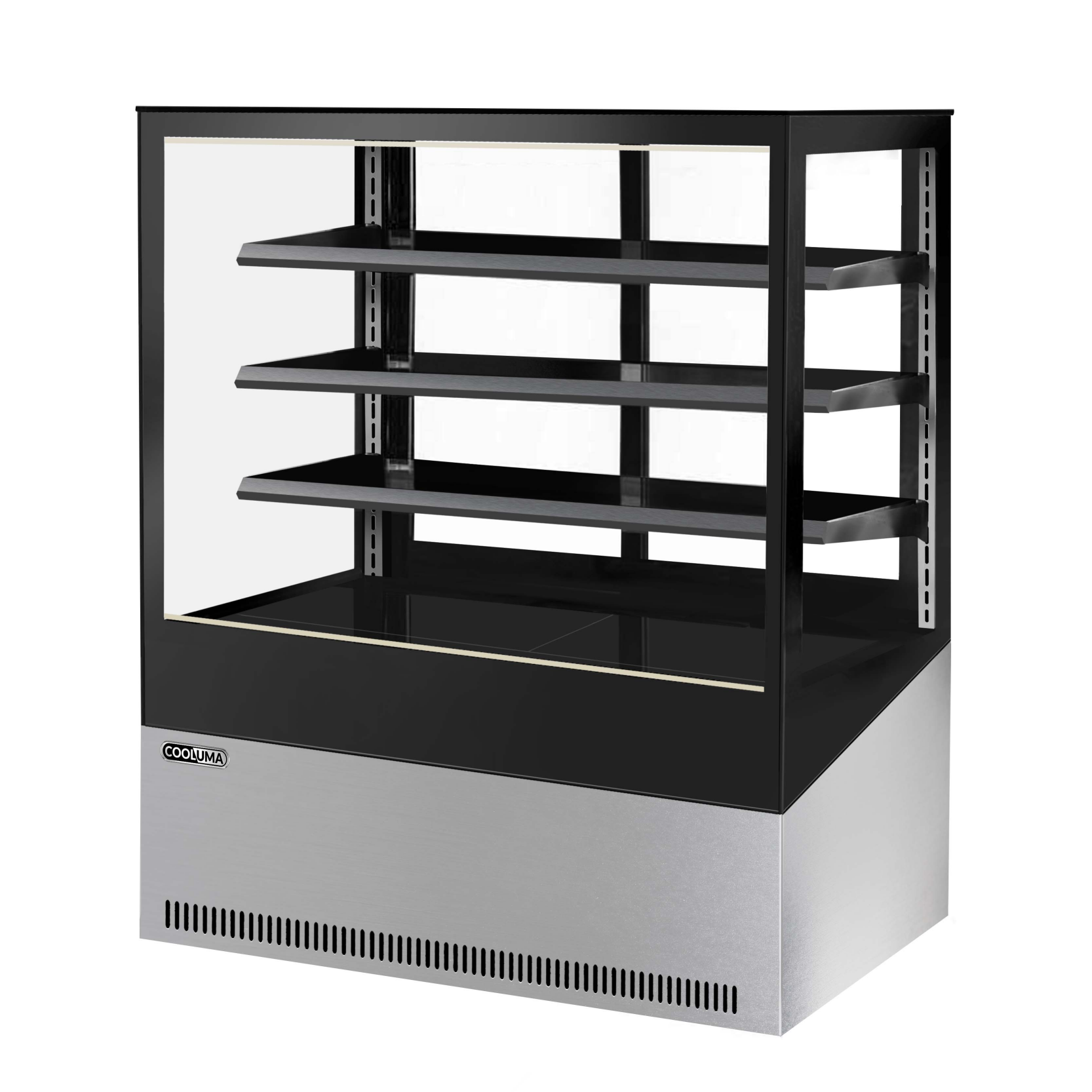
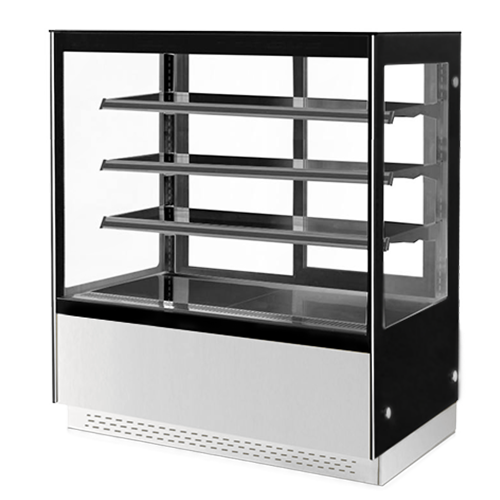
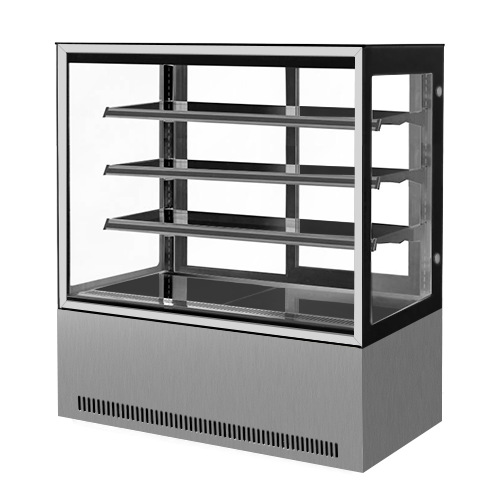
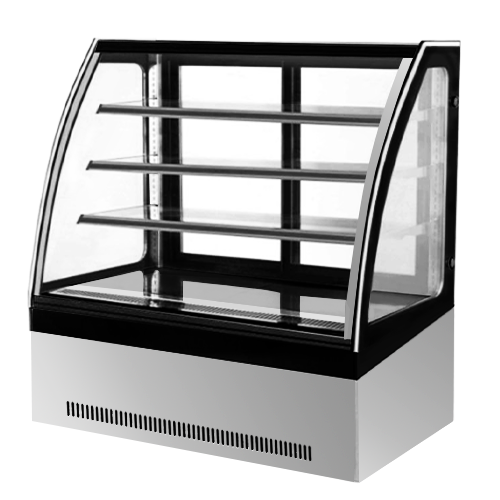
Usually, convenience store display cabinets are classified into various types such as cold drinks, baked goods, snacks, etc., but the selection of core parameters can refer to the following:
First, space adaptation is a prerequisite; don't blindly follow trends in size and capacity. The countertop space in convenience stores is already limited. The first step in choosing a countertop refrigerated cabinet is to clearly "customize according to the counter": first measure the length, width, and load-bearing capacity of the countertop. For conventional countertops, the width of the suitable refrigerated cabinet is recommended to be between 50-80cm, the depth 35-45cm, and the height not exceeding 30cm, to avoid blocking the line of sight or exceeding the countertop's load-bearing capacity, which may cause safety hazards.
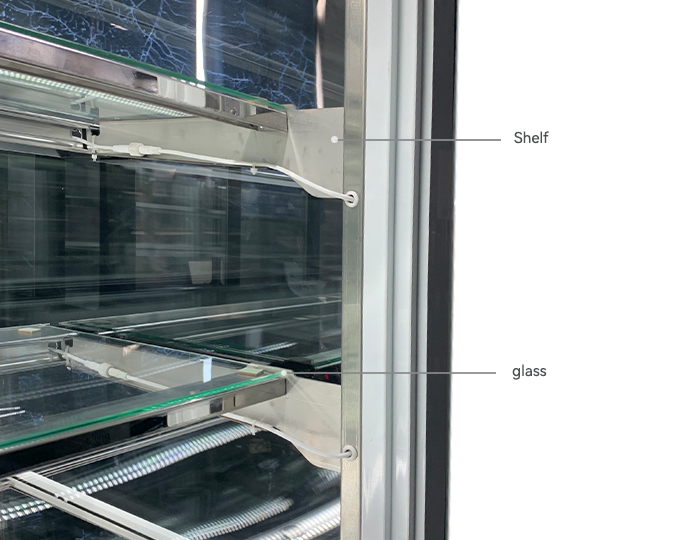
In terms of capacity, community convenience stores should preferably choose 80-120L, which is enough to place 20-30 kinds of ready-to-eat products; convenience stores in busy business districts with dense customer flow can upgrade to 120-150L to increase the display quantity of drinks. It should be noted here that a larger capacity is not necessarily better. An overly large cabinet not only occupies the countertop but also increases energy consumption, which in turn raises operating costs.
Second, the core performance lies in refrigeration; both fresh-keeping and energy-saving are indispensable. The core function of a refrigerated cabinet is to keep food fresh, which directly affects the product loss rate. It is recommended to give priority to models with air-cooled refrigeration. Compared with direct-cooled models, air-cooled refrigeration can achieve 360° three-dimensional circulation refrigeration, and the temperature fluctuation can be controlled within ±1℃, avoiding partial icing or uneven temperature that may cause food spoilage. At the same time, it can reduce frost formation and save the trouble of frequent cleaning. The temperature control range is also crucial. For storing yogurt and ready-to-eat foods, the temperature needs to be stably maintained at 2-8℃, and for drinks, it can be adjusted to 0-10℃. It is best to choose electronic temperature control models, which have higher accuracy and can avoid errors caused by mechanical knob adjustment.
In terms of energy saving, look for the first-level energy efficiency label. High-quality models from brands such as Xingxing and Aucma have a 24-hour energy consumption as low as 0.3-0.5 kWh, which can save a lot of electricity expenses in long-term use.
Third, the display effect should be maximized; detailed designs affect purchasing desire. One of the core values of a countertop refrigerated cabinet is "display to attract customers", and the choice of glass doors is particularly important. Priority should be given to three-layer hollow anti-fog glass, which can effectively lock in cold air and prevent fogging caused by temperature differences between the inside and outside from blocking the products, allowing customers to clearly see the internal display.
For internal lighting, it is recommended to choose LED light strips with a color rendering index of Ra90 or higher, which can truly restore the color of the products, enhance visual appeal, and at the same time, LED lights have lower energy consumption and longer service life. The shelf design should be flexible; choose detachable shelves with adjustable heights to adapt to drinks and rice ball packages of different heights, improving space utilization.
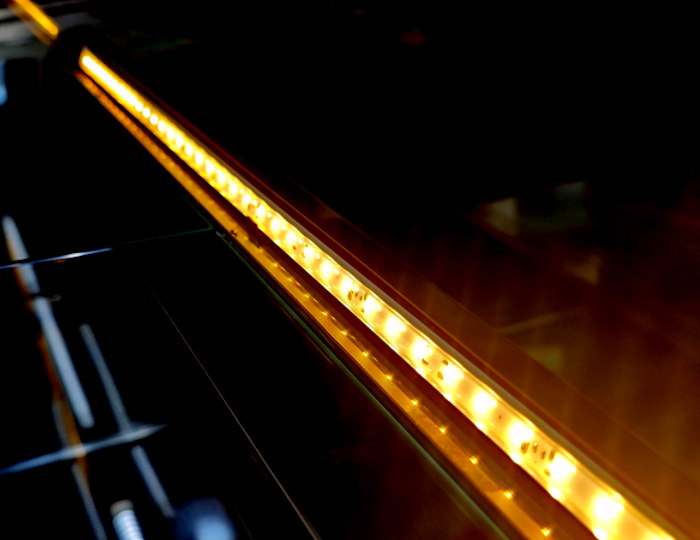
Then, material and after-sales service should not be ignored, as they are related to the long-term use experience. The cabinet material directly affects durability. The outer shell should preferably be made of corrosion-resistant and easy-to-clean stainless steel, and the inner tank should be made of food-grade ABS plastic to ensure safe and non-toxic contact with food and facilitate daily wiping and cleaning. Sealing performance is also crucial. High-quality door seals can effectively prevent cold air leakage and reduce energy consumption. When purchasing, you can manually press the seals to check if they fit tightly and rebound strongly.
In terms of after-sales service, be sure to choose regular brands. Priority should be given to products with a warranty of more than 3 years for core components (compressors, refrigeration systems), and at the same time, confirm that there are local after-sales service points to avoid delayed maintenance affecting business after equipment failure. Brands such as Aucma, Xingxing, and Midea have high market coverage in the field of convenience store equipment and more reliable after-sales response.
Finally, accurately select models according to the business scenario to avoid function waste. If the store focuses on ready-to-eat products, you can choose models with partitions to place rice balls, sandwiches, and drinks in separate areas, improving the neatness of the display; if the focus is on drink display, you can choose cabinets with arc-shaped corner designs to reduce the risk of collision and improve the overall beauty of the store.
For store owners who focus on intelligent management, they can choose models that support remote temperature adjustment via mobile APP and temperature abnormality alarm, to monitor the cabinet temperature in real-time and reduce the risk of product loss. It should be noted that small countertop refrigerated cabinets are not suitable for storing products that require deep refrigeration. If such a need exists, they should be used with vertical refrigerated cabinets.
Cooluma research indicates that the core of choosing for convenience stores is "space adaptation, precise fresh-keeping, efficient display, energy-saving and durability". Selecting according to the above 5 points can not only avoid resource waste caused by blind purchasing but also make the refrigerated cabinet a "good helper" to increase sales. Remember, a suitable small refrigerated display case is not only a storage device but also a "mobile billboard" for the store. Choosing the right one can achieve a double increase in customer flow and sales.
Most popular More «
-
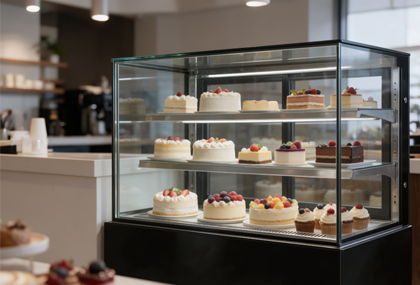
Air vs Direct Cool Cake Cabinets Advantage and Disadvantage
-
How to Choose an Open Display Cooler for Your Fruit Store?
-
What Is the Standard Temperature for Dessert Display Cabinets?
-
Top Compact Upright Display Cooler for Retail Businesses
-
SM15A Commercial Slush Machine Specification
-
Commercial Pastry Display Case Buying Guide for Bakeries & Cafés
-
Cooluma Ice Machines for Seafood Sections in Supermarkets
-
Cooluma Turnkey Coffee Shop Solution
-
How To Choose Commercial Display Freezer For Ice Cream Shop
-
Solutions to Glass Fogging & Water Dripping for Café Cake Display Fridges