









2026 Chain Air Curtain Cabinet Selection Criteria
An air curtain display cabinet is not merely a product display fixture, but also core equipment for the chain retail and catering industries. Unlike independent stores that enjoy flexible purchasing options, chain stores prioritize uniformity, stability and cost-effectiveness when selecting air curtain display cabinets. Such equipment must meet standardized display requirements for all stores nationwide or within a region, cut the overall operating costs of the chain through precise temperature control and energy conservation, and maintain consistent brand image and consumer experience across locations.
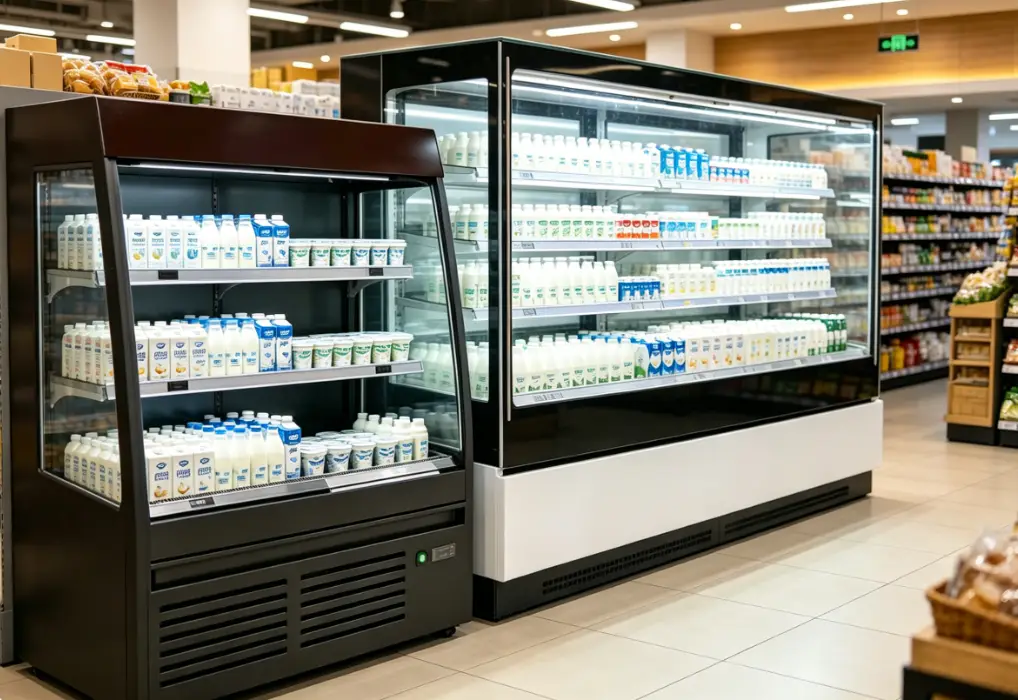
Combining the latest 2026 industry technological trends and pain points in chain operation, this article summarizes six core criteria for chain stores selecting air curtain display cabinets, offering practical guidelines for equipment procurement and long-term operation of chain brands.
For chain stores, choosing an air curtain display cabinet is far more than simply comparing prices or appearances. It requires comprehensive evaluation of equipment performance, compatibility, compliance and supplier strength centered on four key goals: standardized adaptation, controllable quality, cost control and accessible after-sales service.
Against the backdrop of consumption upgrading and national green low-carbon policies, high energy efficiency, intelligent operation and customized adaptation have become new priorities for chain brands during selection. Only by strictly following the six criteria below can brands fully align equipment value with operational needs.
1. Reliable Refrigeration and Freshness Preservation: Safeguard Product Loss Control
Product quality constitutes the core competitiveness of chain stores. The refrigeration and fresh-keeping performance of air curtain display cabinets directly determines the spoilage rate and quality stability of perishable goods such as fresh produce, dairy products and cooked food.
Chain stores feature large outlet numbers and high product turnover. Even minor deviations in refrigeration performance may lead to mass spoilage across regional outlets, resulting in substantial economic losses and damaging brand reputation. For this reason, refrigeration and fresh-keeping capability is the top consideration in selection, with three key indicators to evaluate.
First, precise temperature control and temperature difference stability. The defining advantage of air curtain display cabinets lies in their open display design, which sets higher standards for temperature accuracy.
According to the 2025 Supermarket Cold Chain Report released by the China Chain Store & Franchise Association, open refrigerated and frozen display cabinets without high-quality air curtain protection suffer a cold air loss rate of over 45%. Internal temperature fluctuations can shorten the shelf life of fresh goods by 20-30%. For chain stores, refrigerated air curtain cabinets must maintain a steady temperature between 2°C and 8°C, while frozen models should stay below -18°C, with the internal temperature difference strictly controlled within ±0.5°C. This standard improves temperature uniformity by nearly 40% compared with ordinary cabinets, effectively preventing local frost damage or deterioration of goods.
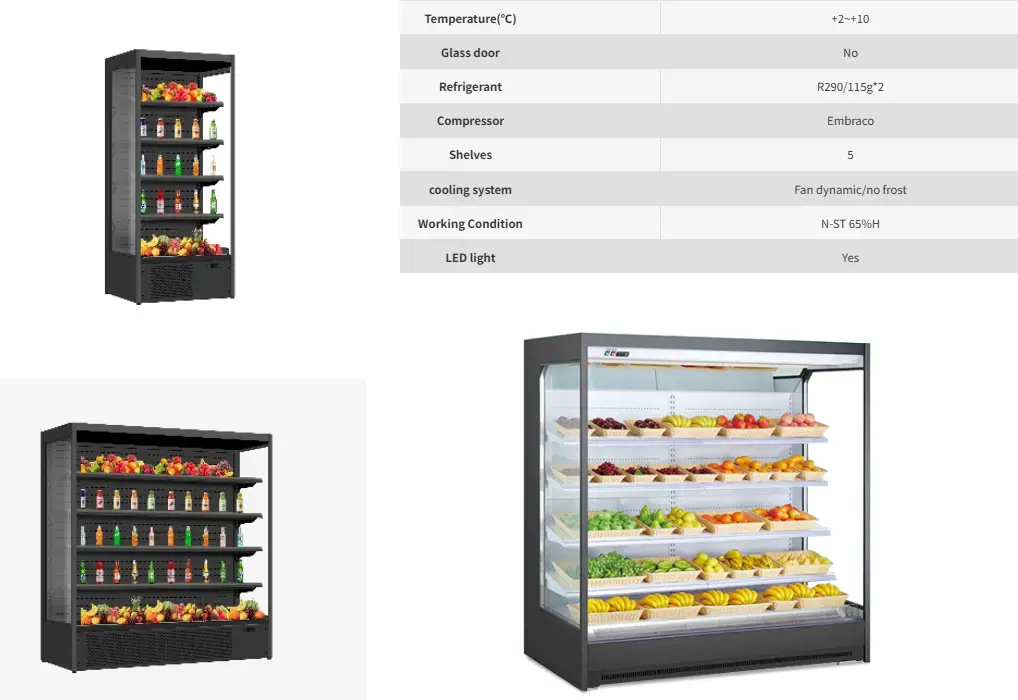
For instance, the new-generation three-dimensional circulating air curtain cabinets adopt a multi-directional duct design and intelligent airflow simulation system to deliver all-round circulating airflow, keeping every food item in a stable low-temperature environment and significantly cutting product spoilage rates.
Second, air curtain barrier efficiency and cold air retention capacity. As an invisible protective barrier for open display areas, the air curtain system’s efficiency directly affects refrigeration performance and energy consumption. It forms an efficient air barrier through high-speed laminar airflow, with wind speed maintained at 10-12m/s for refrigerated cabinets and raised to 12-15m/s for frozen units. This ensures a cold air retention rate of over 90% for refrigerated cabinets and above 85% for frozen ones, reducing energy consumption by 20-30% compared with cabinets without air curtains.
Additionally, given the heavy foot traffic in chain store outlets, the equipment should be fitted with infrared sensor modules that automatically increase wind speed by 20% during peak shopping hours to prevent turbulent airflow from disrupting the air curtain and avoid cold air loss. If the store’s air conditioning vents are positioned close to the air curtain cabinet, the air curtain outlet angle should be adjusted to 45 degrees with a deflector installed, limiting air curtain deviation to within 5%.
Third, fresh-keeping technology and material compatibility. Different types of chain stores have distinct fresh-keeping demands. Fresh food chains prioritize high-humidity preservation, maintaining internal humidity at 85%-95% to inhibit dehydration and wilting of fruits and vegetables. Cooked food air curtain cabinets for catering chains require antibacterial inner liners to reduce bacterial growth and meet food hygiene standards. Convenience store air curtain cabinets need multi-category fresh-keeping functions with wide-range precise temperature control from -3°C to 8°C, suitable for dairy products, snacks and a small selection of fresh goods.
In terms of materials, cabinet bodies should adopt thickened food-grade stainless steel for corrosion resistance and easy cleaning, catering to the frequent cleaning needs of chain outlets. Glass doors should use high-transmittance explosion-proof glass with unobstructed visibility, optimizing display effects while enhancing safety and preventing breakage from pedestrian collisions in crowded stores.
2. Cut Long-Term Operating Costs to Fit Large-Scale Chain Operation
One core competitive edge of chain stores lies in cost advantages brought by large-scale operation. As 24-hour high-energy-consumption equipment, air curtain display cabinets’ energy efficiency directly impacts the overall operating expenses of the entire chain system.
Industry field test data shows that traditional air curtain cabinets consume thousands of kilowatt-hours of electricity monthly when running continuously. By contrast, premium energy-saving models reduce overall energy consumption by over 32%, saving more than 1,800 US dollars in electricity costs per unit annually. For chains with a thousand outlets, the annual electricity savings can exceed millions of yuan. Therefore, energy conservation is a core selection consideration, covering three key aspects.
Firstly, energy efficiency of core components. As the heart of an air curtain cabinet, the energy efficiency rating of the compressor determines overall power consumption. Chain stores should prioritize first-class energy efficiency compressors from internationally renowned or industry-leading brands. These compressors deliver high refrigeration efficiency, stable operation and low noise levels (controlled below 60dB), ideal for long-term continuous operation in retail outlets.
Meanwhile, the fan system should adopt variable-frequency centrifugal fans with efficiency of 85% or higher, supporting continuous wind speed adjustment from 0 to 15m/s. During off-business hours (22:00-6:00), the system automatically switches to low-speed mode at 5-8m/s, cutting energy use by 60% for frozen cabinets and 50% for refrigerated units to further reduce nighttime power consumption.
Secondly, the application of intelligent energy-saving technology has become a key selling point of modern air curtain cabinets. Chain stores should select equipment equipped with adaptive temperature control algorithms, which automatically adjust refrigeration intensity based on internal product density and ambient temperature, and enter low-power standby mode during idle periods. Some high-end models feature heat recovery systems that recycle cold air via plate heat exchangers to pre-cool fresh air, achieving an energy-saving rate of up to 25% for frozen cabinets with a payback period of approximately 1.8 years, perfectly suited for large-scale supermarket chains. In addition, models fitted with night energy-saving curtains can cover the air curtain opening after closing hours to minimize cold air loss and further save energy, making them ideal for convenience stores and community chain outlets.
Finally, environmental protection and energy efficiency of refrigerants. Driven by green low-carbon policies, eco-friendly refrigerants have become the industry standard. Chain stores should opt for air curtain cabinets using natural eco-friendly refrigerants such as R290, which comply with the Kigali Amendment to the Montreal Protocol while delivering higher refrigeration efficiency and lower energy consumption with no environmental pollution. Avoid equipment using inferior refrigerants, as such units consume more power, pose potential safety hazards and incur higher subsequent maintenance costs.
3. Balance Unified Brand Image and Individual Store Differences
The core operational logic of chain stores is standardized replication and large-scale expansion. As an important part of in-store branding, air curtain display cabinets must maintain a unified brand image. Meanwhile, outlets in different regions and formats — such as community stores, commercial district stores and flagship stores — vary in space size and product structure, requiring equipment to support customized design. Balancing standardization and customization is a key selection criterion for chain stores.
On the one hand, standardized appearance and dimensions. Air curtain display cabinets across all outlets must maintain consistency in color, logo placement and overall design to align with the unified brand image. For example, convenience store chains often adopt minimalist white or silver air curtain cabinets branded with corporate logos to elevate store texture. Fresh food chains prefer transparent cabinet designs to highlight product freshness.
In terms of dimensions, a standardized size system should be established with regular specifications such as 3-foot, 4-foot and 6-foot models (corresponding to lengths of 915mm, 1220mm and 1830mm). This facilitates store space planning, unified bulk procurement and equipment replacement, lowering purchasing and warehousing costs.
On the other hand, customized functions and spatial adaptation. Equipment must offer flexible customization to accommodate individual store differences. Commercial district stores with heavy foot traffic and fast product turnover can be fitted with large-capacity multi-layer display air curtain cabinets to boost product display volume and turnover efficiency. Compact built-in air curtain cabinets can be customized for small-sized community stores to save floor space. Outlets in high-humidity southern regions require air curtain cabinets with integrated dehumidification functions, controlling supply air humidity below 40% to prevent white fog formation on frozen cabinet air curtains that affects product presentation.
Furthermore, some chain brands can order split-type air curtain cabinets from manufacturers, with compressors installed outdoors to reduce indoor noise and save in-store space, enhancing the overall shopping experience.
4. Intelligent Convenience and Standardized Operation & Maintenance Management
Chain stores feature large outlet numbers and wide geographical distribution, making equipment operation and maintenance challenging. Overly complex and hard-to-maintain air curtain display cabinets will substantially increase labor and management costs for retail chains.
Intelligent usability and easy maintenance are vital selection factors, focusing on operational simplicity, remote management capability and service convenience.
In terms of operational simplicity, cabinets should be equipped with user-friendly control panels supporting one-touch startup, temperature adjustment and mode switching. Store staff can operate the equipment after basic training without professional technical support.
The equipment should also feature self-diagnosis functions. In cases of refrigeration abnormalities or air curtain malfunctions, the system triggers an automatic alarm and displays fault codes, enabling staff to quickly troubleshoot issues and minimize downtime.
For remote management priority should be given to IoT-enabled air curtain cabinets that can connect to the chain’s headquarters management system, supporting remote monitoring, temperature adjustment and fault early warning. Headquarters can view real-time operating status and temperature data of air curtain cabinets across all outlets. Abnormal equipment conditions trigger timely alerts and maintenance arrangements to avoid product spoilage caused by breakdowns. Meanwhile, headquarters can remotely unify temperature parameters for all stores according to seasonal changes and product structure adjustments, realizing standardized management and cutting administrative costs.
In terms of maintenance convenience, equipment should adopt a modular design, allowing quick disassembly and replacement of core components including compressors, fans and thermostats to shorten repair time. Easily soiled parts such as filter screens and air outlets should be rationally structured for regular staff cleaning, preventing dust blockages that impair refrigeration performance and raise energy consumption.
In addition, the equipment should feature long maintenance cycles — such as semi-annual cleaning and annual full inspection — to reduce maintenance frequency and costs while meeting the large-scale management needs of chain stores.
5. Compliance and Safety Standards
As large-scale business entities, chain stores must strictly abide by national laws, regulations and industry standards. The compliance and safety of air curtain display cabinets are directly related to normal store operation and brand reputation. Selection should focus on two major aspects: compliance certification and safety protection.
For compliance certification, equipment must hold mandatory 3C certification, ISO9001 quality management system certification and other relevant qualifications to ensure product quality meets national and industry standards. Cabinets used for food display must comply with the Food Safety Law. Inner liners, seals and other food-contact components must be made of food-grade materials with no peculiar odor or harmful substance emissions.
Moreover, energy consumption labels must be clearly marked in line with national energy efficiency standards, avoiding regulatory penalties and operational disruptions due to non-compliance.
In terms of safety protection, comprehensive safety mechanisms are essential. Leakage protection devices prevent electric leakage accidents during operation, safeguarding staff and consumers. Overload protection units protect core components such as compressors and fans from overload damage and extend equipment service life. Shatter-proof glass door design using explosion-proof glass or protective railings prevents injuries caused by glass breakage.
Additionally, cabinet exteriors should be made of corrosion-resistant and scratch-proof materials to withstand damage in high-foot-traffic environments and avoid rust-induced service life reduction.
6. Supplier Strength Standard: Full-Cycle Service Support for Chain Expansion
The average service life of an air curtain display cabinet ranges from 5 to 8 years, requiring professional installation, repair and maintenance throughout the period. For chain stores, supplier strength directly determines equipment operational stability and later maintenance efficiency. Therefore, selection involves evaluating not only the equipment itself but also the overall capability of the supplier, with three core competencies to assess.
First, service network coverage. With geographically dispersed outlets, chain brands require suppliers with a comprehensive nationwide or regional service network and local after-sales outlets. This ensures technicians can provide on-site maintenance rapidly (with a recommended 24-hour response time) to minimize equipment downtime and product spoilage. Leading manufacturers have established nationwide after-sales systems with a 24-hour response guarantee and cost-only charging beyond the standard warranty period, effectively supporting the national expansion of chain brands.
Second, customization and delivery capability. Suppliers must have a professional customized design team capable of rapidly completing tailored design, production and delivery according to chain brand requirements, ensuring perfect compatibility between equipment, store space and product structure. For example, a catering chain required customized split-type air curtain cabinets for narrow back-of-house passageways; a qualified supplier completed design to delivery in just 10 days and optimized the duct structure to meet precise temperature control demands. Meanwhile, suppliers need large-scale production capacity to fulfill bulk chain procurement orders, enabling synchronized delivery and installation across all outlets without delaying store opening schedules.
Third, after-sales support and training capability. Suppliers should provide comprehensive after-sales services including equipment installation and commissioning, regular maintenance and fault repair, alongside professional training on equipment operation and upkeep to help store staff master usage skills and reduce operational costs. Sufficient spare parts supply must also be guaranteed to enable quick component replacement during repairs and shorten downtime. Chain brands are advised to partner with suppliers rich in chain industry experience, who better understand operational pain points and can deliver more tailored service solutions.
For chain stores, selecting air curtain display cabinets is a strategic decision for long-term operation rather than a simple equipment purchase. The core principle is to align choices with brand operational demands while balancing quality, cost, brand image and after-sales service. By strictly adhering to the six core criteria covering refrigeration and freshness preservation, energy conservation, standardization and customization, intelligent operation and maintenance, compliance and safety, as well as supplier strength, brands can select equipment matching their positioning and operational needs, achieving the goals of reducing spoilage, controlling costs, enhancing consumer experience and strengthening brand image.
With the commercialization of new technologies such as magnetic levitation fans and plasma air curtains in 2026, air curtain display cabinets are evolving toward higher energy efficiency, greater intelligence and deeper customization. Brands should keep pace with industry technological trends and prioritize equipment and suppliers with mature technology, comprehensive services and high cost performance.
Most popular More «
-
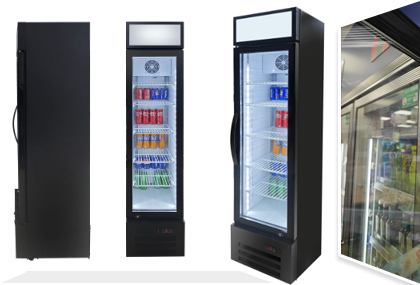
Top Compact Upright Display Cooler for Retail Businesses
-
SM15A Commercial Slush Machine Specification
-
Commercial Pastry Display Case Buying Guide for Bakeries & Cafés
-
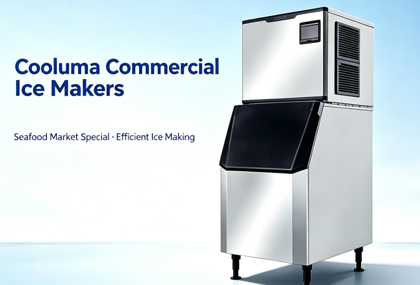
Cooluma Ice Machines for Seafood Sections in Supermarkets
-
Cooluma Turnkey Coffee Shop Solution
-
How To Choose Commercial Display Freezer For Ice Cream Shop
-
Solutions to Glass Fogging & Water Dripping for Café Cake Display Fridges
-
How to Optimize Packaging for Commercial Refrigerator Spare Parts to Reduce Import Costs
-
Cooluma Unveils New Commercial Ice Makers, Beverage Dispensers and Slush Machines
-
BC Series Can-Shaped Beverage Coolers