









R290 or R600a for Cake Display Refrigerators?
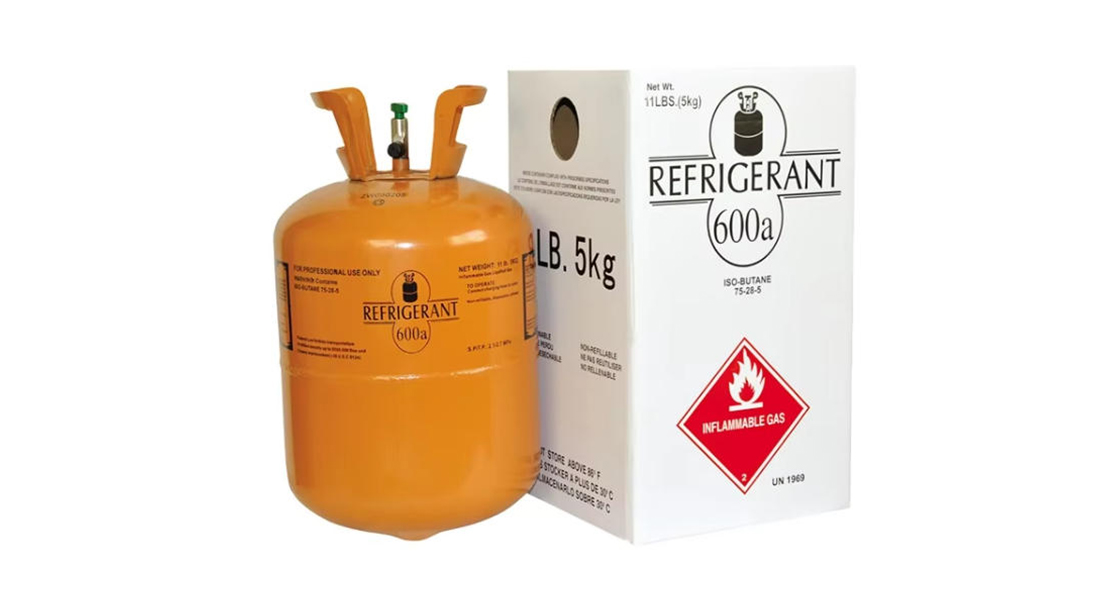
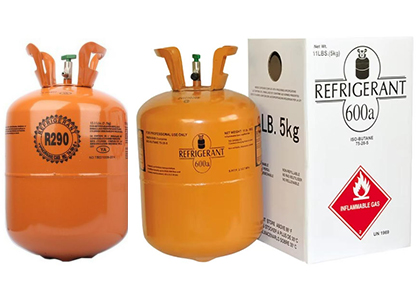
The choice of refrigerant for cake display refrigerators may seem like a simple pick between two hydrocarbon refrigerants: propane (R290) and isobutane (R600a). At its core, however, it is a trade-off between cooling performance and charging safety. To cut to the chase: R290 is the preferred option for commercial cake display refrigerators, while R600a is better suited for compact household refrigeration equipment. The reasoning lies in their physical properties and the operating conditions of the refrigerated cabinets.
1. Both are “Naturally Eco-Friendly” Refrigerants
R290 (propane, chemical formula C₃H₈) and R600a (isobutane, chemical formula C₄H₁₀) are both hydrocarbons. Both have an ODP (Ozone Depletion Potential) of 0 and a GWP (Global Warming Potential) of roughly 3, far lower than traditional refrigerants such as R22 and R134a. They are leading representatives of the natural working fluid approach today. China’s Ministry of Ecology and Environment lists both substances in its Recommended List of Ozone-Depleting Substance Alternatives as recommended replacements for HCFC‑22 in commercial standalone refrigeration systems. Environmentally speaking, both meet compliance requirements. The difference between them is not environmental performance but refrigeration characteristics.
2. Core Differences: Cooling Capacity, Pressure and Refrigerant Charge
Cooling Capacity: R290 delivers substantially higher volumetric cooling capacity than R600a, around 1.5 times that of R134a and close to the level of R22. R600a, by contrast, has weaker cooling power; compressors with much larger displacement are required to achieve equivalent results (roughly 70% greater displacement than R134a systems under comparable operating conditions).
System Pressure: R290 operates at significantly higher working pressure, with a condensation pressure several times that of R600a (at 40°F, saturation pressure stands at approximately 63.9 PSIG versus only about 11.9 PSIG for R600a). This places stricter demands on pipeline pressure resistance and system sealing.
Refrigerant Charge: Both require low refrigerant charges (typically around 40% less than conventional refrigerants). Still, R600a features a high latent heat of vaporization, so less working fluid is needed to deliver the same cooling output, making it ideal for small, hermetic systems.
3. Why R290 Works Better for Cake Display Refrigerators
Unlike household refrigerators, cake display cabinets operate under three distinct conditions: relatively large internal volume (often above 300L, even up to thousands of litres), frequent door openings for product display and retrieval leading to large fluctuations in heat load, and fast cooling to preserve cake shape, as cream and mousse melt easily. These requirements demand high maximum cooling capacity and rapid temperature pull-down.
Side-by-side field tests show that under high ambient temperature (43°C), R290 systems deliver roughly 70% higher cooling capacity and around 45% faster temperature reduction than R600a systems. For cake cabinets, this means the unit can quickly lower temperatures even under heavy summer loads and limit temperature spikes after door openings, better preserving the appearance and texture of cakes. For this reason, leading compressor manufacturers and refrigeration equipment suppliers position R290 as the primary refrigerant for commercial refrigeration and refrigerated display merchandisers, while R600a is reserved mainly for low-power applications such as domestic fridges and compact portable coolers.
4. Addressing R290’s Tradeoff: Safety
Both R290 and R600a are classified as ASHRAE A3 highly flammable refrigerants. That said, R290’s higher operating pressure and larger cabinet size impose more stringent safety design requirements: strict limits on per-unit refrigerant charge (usually capped below 150g), explosion-proof treatment for electrical components, plus leak detection and automatic cut-off protection. For buyers, when selecting R290 cabinets, always opt for qualified products from certified manufacturers. Installation and maintenance must be performed by licensed technicians; unauthorized refrigerant topping-up or system modifications are prohibited.
5. Conclusions and Recommendations
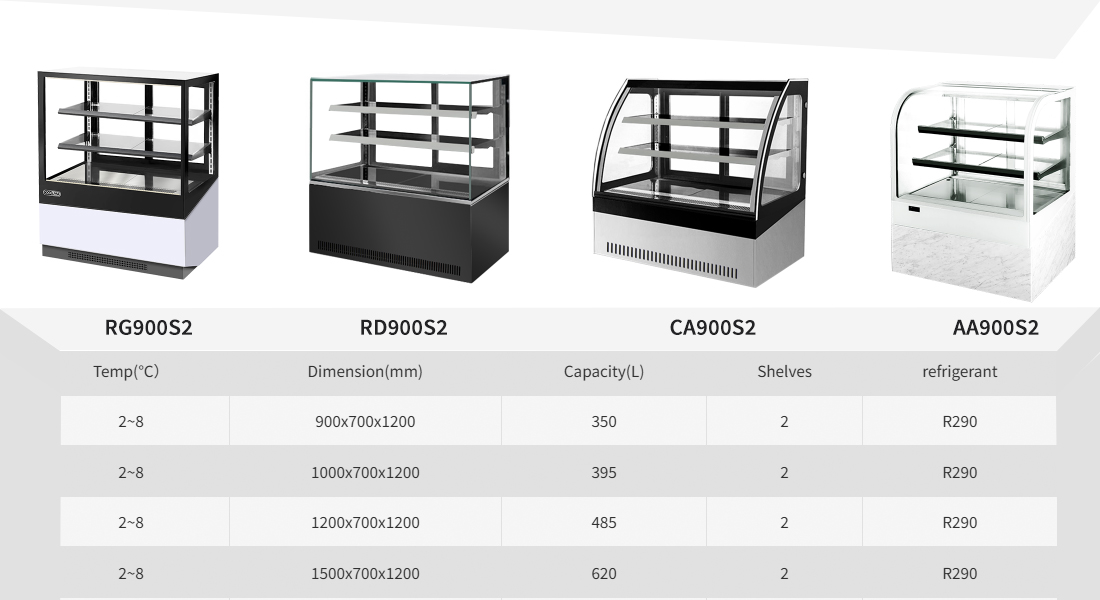
Medium and large commercial cake display chiller, bakery shops: Choose R290. It offers ample cooling capacity and fast temperature recovery, handles frequent door openings well, and is the standard, suitable choice for today’s commercial display cabinets.
Small residential cake refrigerators, portable vehicle-mounted coolers: Choose R600a. It requires a smaller refrigerant charge, runs at lower pressure, operates more quietly, and its safety is easier to manage.
Never mix refrigerants: R290 and R600a systems are engineered with completely different operating pressures, charge volumes and piping designs. They must not be substituted or mixed, as this creates serious leak risks and safety hazards.
One-sentence summary: Base your selection on cabinet size and heat load. Pick R290 for cake display cases that need strong, fast cooling; use R600a for small-volume, low-load scenarios. Since Cooluma’s cake cabinets are built for commercial use, they adopt R290 refrigerant.


Most popular More «
-
R290 or R600a for Cake Display Refrigerators?
-
Is it expensive to customize light strips for cake display chiller?
-
Selection Guide for Shelving Systems of Refrigerated Beverage Display Cabinets
-
How to Control the Procurement Cost of Open Refrigerated Display Cabinets for Supermarkets
-
Air vs Direct Cool Cake Cabinets Advantage and Disadvantage
-
How to Choose an Open Display Cooler for Your Fruit Store?
-
What Is the Standard Temperature for Dessert Display Cabinets?
-
Top Compact Upright Display Cooler for Retail Businesses
-
SM15A Commercial Slush Machine Specification
-
Commercial Pastry Display Case Buying Guide for Bakeries & Cafés