









How to Choose an Open Display Cooler for Your Fruit Store?
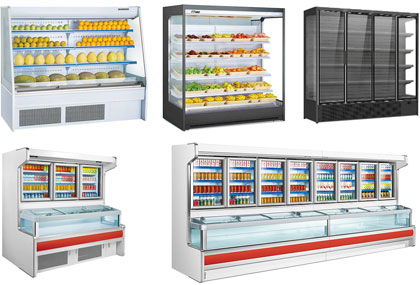
For any fruit store, an open display cooler is practically the "second face" of the business. It extends fruit shelf life, reduces spoilage, improves product presentation, and boosts average order value. However, many first-time store owners only look at appearance and low prices when making their first purchase. Only after installation do they discover the issues: fruits on upper shelves get frozen and watery, while those on lower shelves soften from uneven, overly warm temperatures. Within just a couple of days, fruit skins shrivel and dry out, and the daily cost of wasted produce far exceeds expectations.
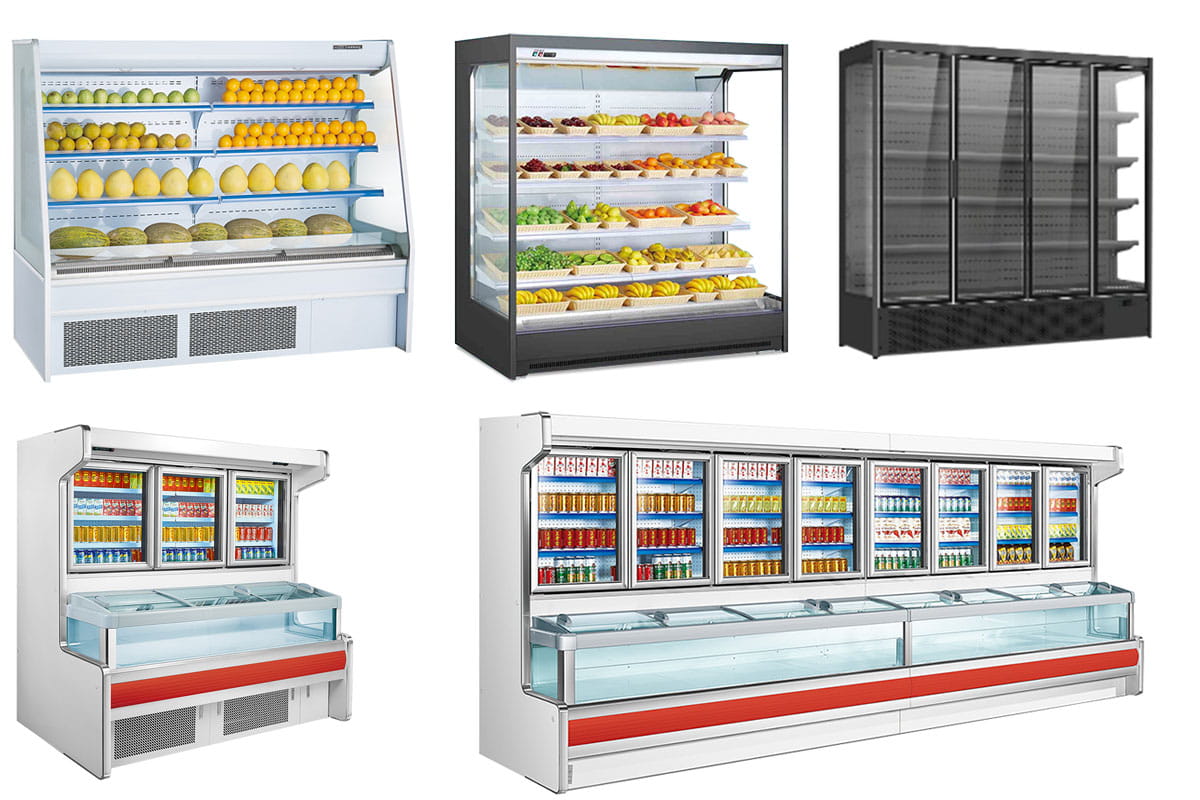
Choosing the right cooler is never as simple as "just buying a cabinet." It should be a decision aligned with four core business goals: reduce spoilage, cut electricity costs, deliver better display, and ensure long-term durability. Below, we break down the key selection criteria for fruit store display coolers from a practical operational perspective, helping you avoid 90% of the common mistakes new buyers make.
1. Temperature Uniformity Directly Determines Fruit Spoilage Rate
The foundation of fruit preservation is consistent low temperatures. The greater the temperature fluctuation, the faster the fruit’s respiration rate, and the higher the spoilage. A standard fruit store open display cooler operates within a 2–12°C range, but budget models almost always suffer from uneven temperatures: areas near the air outlets drop close to 0°C, easily freezing berries and leafy greens, while corners of the cabinet can exceed 10°C, causing peaches and grapes to ripen and soften prematurely.
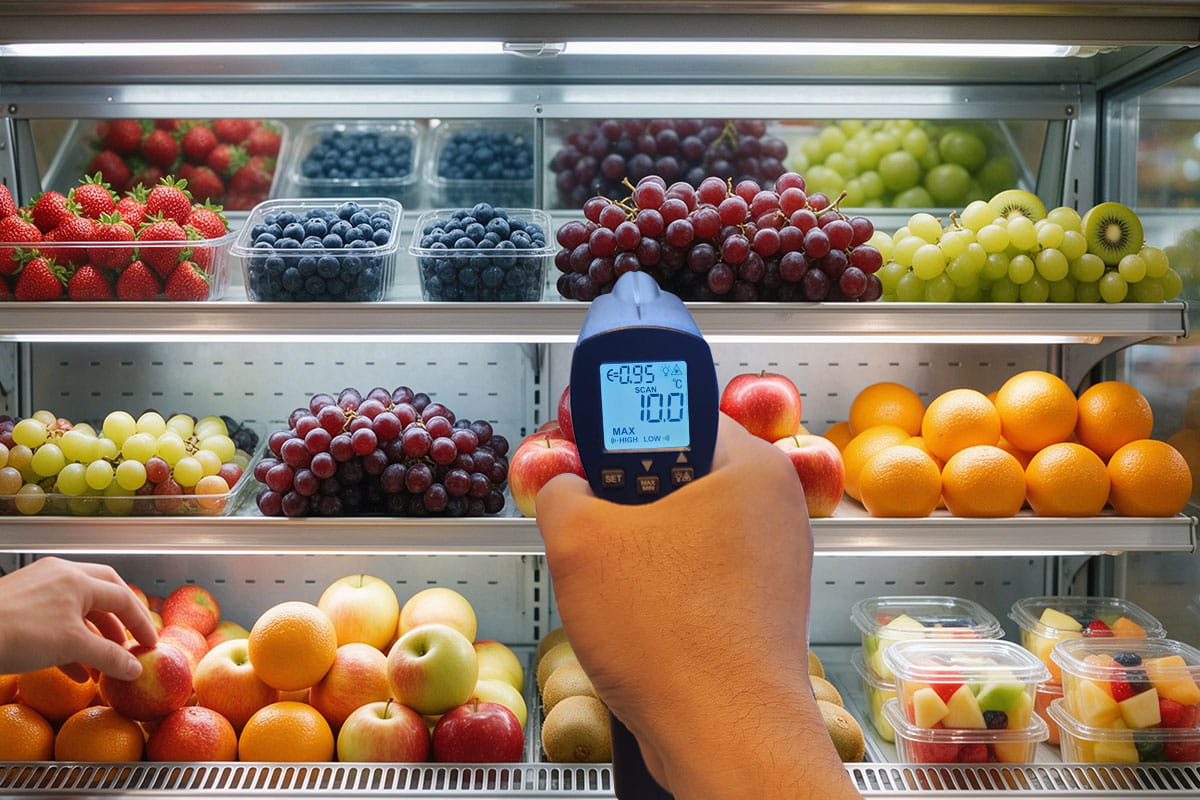
Key Buying Tips: Prioritize models with dual top-and-bottom air duct circulation paired with precise electronic temperature control, keeping temperature fluctuations within ±1°C. Before purchasing, ask the supplier: what is the temperature difference between each shelf inside the cabinet, and do you have verified test data? If a model can only achieve a fluctuation of ±3°C or more, it is not recommended.
Also note: if you specialize in tropical fruits (mangoes, bananas, durians), you will need a model with an adjustable warmer zone. If you focus on berries and cut fruit, prioritize models with more stable low temperatures to avoid a one-size-fits-all approach.
2. Avoid Direct Airflow That Dries Out Your Fruit and Cuts Weight
Many store owners complain that "fruit shrivels and loses moisture after just two days in the cooler," and the root cause is poor air circulation design. Low-quality coolers use fans that blow directly onto the fruit surface, forcibly stripping moisture. While this may seem to cool faster, it actually causes fruit to lose 5%–10% of its weight per day, leaving them looking unappealing and lighter on the scale.
The mark of a high-quality open display cooler is "laminar air curtain + humidity retention design": Cold air forms a uniform air curtain along the inner walls of the cabinet, sealing in cold air inward without blowing directly on the fruit surface. At the same time, the cabinet maintains a relative humidity of around 80%, reducing moisture loss. Premium models feature micro-hole air outlets and built-in humidification modules, which can extend the shelf life of high-spoilage items like cut fruit and strawberries by 2–3 days.
A simple way to tell: check the position of the air outlets. If they are located on both sides of the top and bottom of the cabinet, it is most likely a laminar flow design. If air blows directly onto the shelves, choose with caution.
3. Size & Display: Match Your Store Layout to Drive Sales
Bigger is not always better when it comes to open display coolers. You need to choose a size based on your store area, customer flow direction, and product assortment. Common sizes include 1.5m, 2m, 2.5m, and 3m, and multiple units can be joined together for larger spaces.
For placement against a wall: Choose a vertical single-sided open display cooler with a depth of 60–70cm, ideal for regular packaged fruit and cut fruit.
For island placement in the middle of the store: Choose a double-sided open display cooler, accessible to customers from both sides. It is perfect for traffic-driving bestsellers and seasonal fruit displays.
Prioritize adjustable shelves: They can hold large fruits like watermelons and cantaloupes, and can be lowered for packaged strawberries and cherry tomatoes, flexibly adapting to seasonal product changes.
Also don’t overlook lighting: Choose warm white LED strip lights with a high color rendering index. They bring out the natural color of fruit, making them look fresher than cool white lighting and directly boosting customer purchase intent.
4. Compressor & Energy Efficiency: Lower Operating Costs Beat Low Upfront Price
The compressor is the heart of an open display cooler, directly determining cooling performance and service life. For commercial use, prioritize well-known brand compressors such as Panasonic, Danfoss, and GMCC. While off-brand compressors may seem to save you a few thousand yuan upfront, they come with higher failure rates and skyrocketing electricity costs later on. The loss from a cabinet full of spoiled fruit far outweighs any initial savings.
In terms of energy consumption, commercial open display coolers run 24 hours a day, so electricity is a long-term cost. For a 2-meter model, a high-quality air-cooled unit uses about 3–5 kWh per day, while budget models can use 7–8 kWh. Over a year, that adds up to a difference of thousands of yuan in electricity bills. When purchasing, check the energy efficiency label, or ask the supplier to specify the daily power consumption and include it in the quotation.
Here’s a common misconception: fruit stores should prioritize frost-free air-cooled models, eliminating the need for manual defrosting and saving labor costs. But you need a high-quality air-cooled system — it’s only low-quality air-cooled systems that cause fruit drying issues.
5. Materials & Insulation
Insulation and build quality are where budget models cut corners the most, directly impacting energy consumption and service life.
For the inner liner, choose food-grade 304 stainless steel. It is waterproof, rust-resistant, and easy to clean. Plastic liners yellow and crack over time, trap dirt, and fail to meet food safety standards.
The insulation layer must be integral polyurethane foam with a thickness of at least 5cm, featuring uniform, dense foaming. Many budget models use recycled materials and have insufficient insulation thickness, causing massive cold air loss. This makes the compressor cycle on and off frequently, which wastes electricity and shortens the unit’s lifespan.
For glass and accessories, choose double-layer hollow anti-fog glass. It won’t fog up even with large temperature differences inside and outside the cabinet, so no constant wiping is needed and customers always have a clear view. The unit should come standard with a night curtain, which reduces cold air loss after closing hours and cuts energy use by over 30%.
6. After-Sales Service Matters More Than Price
Open display coolers are large commercial equipment with high barriers for transportation, installation, and repair. If a breakdown occurs, hundreds of kilograms of fruit inside can be completely ruined, and the loss far exceeds the value of the cooler itself.
Always confirm before buying: Is there a local after-sales service point? How fast is on-site repair for breakdowns? What are the warranty periods for the compressor and the whole unit respectively? Prioritize manufacturers or branded dealers with their own after-sales teams, and avoid middlemen with no service capability. Many ultra-low-price models come with no support after sale. When they break down, you have to find repair help on your own — parts are hard to find and business is disrupted in the meantime.
Choosing an open display cooler for your fruit store is essentially choosing a "preservation tool" and a "display tool" — don’t fall into the trap of only comparing low prices. A good quality cooler saves you kilograms of wasted fruit, cuts electricity use, and drives extra sales every day, and it pays for the price difference within half a year. Prioritize models with uniform temperature control, non-drying air curtain design, brand-name compressors, and solid insulation, then match the size to your store. With these criteria, you can hardly go wrong.

Most popular More «
-
How to Choose an Open Display Cooler for Your Fruit Store?
-
What Is the Standard Temperature for Dessert Display Cabinets?
-
Top Compact Upright Display Cooler for Retail Businesses
-
SM15A Commercial Slush Machine Specification
-
Commercial Pastry Display Case Buying Guide for Bakeries & Cafés
-
Cooluma Ice Machines for Seafood Sections in Supermarkets
-
Cooluma Turnkey Coffee Shop Solution
-
How To Choose Commercial Display Freezer For Ice Cream Shop
-
Solutions to Glass Fogging & Water Dripping for Café Cake Display Fridges
-
How to Optimize Packaging for Commercial Refrigerator Spare Parts to Reduce Import Costs