









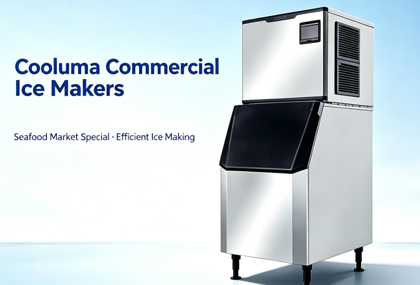
Cooluma Ice Machines for Seafood Sections in Supermarkets
Within the operational system of modern fresh food supermarkets, seafood constitutes a core business segment. Live fish, shrimp, shellfish and chilled seafood rely heavily on a steady supply of ice. Traditional purchased bagged ice comes with continuously rising costs, substantial melting losses during transit and uncontrollable sanitary quality, which compromises food safety. Especially during peak footfall on weekends and holidays, outsourced ice is frequently out of stock. Thinning ice layers and rising temperatures on seafood display counters directly cause seafood dehydration and spoilage, pushing waste rates sharply higher and bringing heavy financial losses to supermarkets. For this reason, a growing number of chain fresh food supermarkets are installing their own commercial ice makers to build in-house ice production systems.
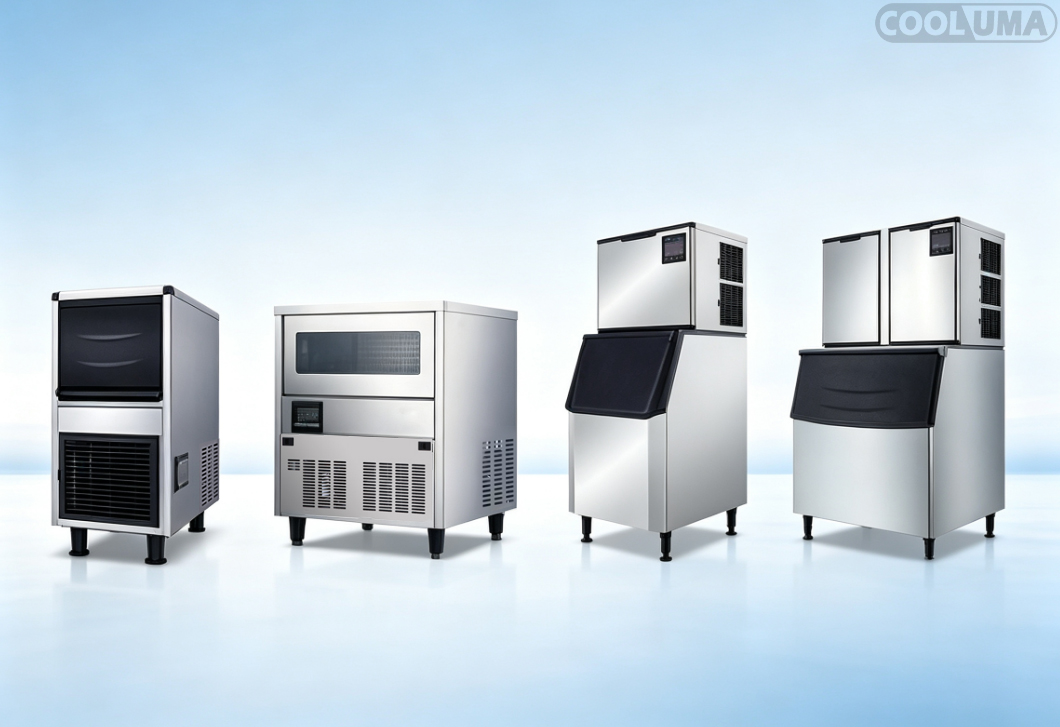
Seafood sections in supermarkets have unique requirements for ice-making equipment that differ from those for bubble tea shops or bar beverage applications: stable and continuous ice output, ice shapes optimized for seafood display, food-grade hygiene standards, corrosion resistance for humid, high-salt environments, large ice storage bins to accommodate peak ice demand and low maintenance costs. Meanwhile, equipment models must cater to different store sizes including small neighborhood supermarkets, medium-sized comprehensive supermarkets and large chain hypermarkets. As a brand specializing in commercial cold-chain equipment, Cooluma offers multiple product lines including crescent ice, nugget ice and cube ice. Its full product portfolio ranges from compact countertop units producing 36kg of ice per 24 hours to large modular ice makers with a daily output of 909kg. Models with varied capacities can match diverse ice consumption needs. Furthermore, the equipment’s materials, refrigeration systems, intelligent controls and sanitary designs are all optimized for the harsh humid, salt-fog environment of fresh seafood areas.
I. Core Ice-Making Requirements for Supermarket Seafood Sections
Ice demand for supermarket seafood sections is determined by ice consumption volume, indoor temperature, floor space and required ice type.
First, ice shape requirements. Crescent ice and nugget ice are the optimal ice forms for seafood preservation. Crescent ice features smooth rounded edges with no sharp corners. When laid on display counters, it will not puncture fish skin or shrimp shells to preserve seafood appearance. It fits closely to fill gaps between seafood items and delivers full-coverage cooling. Its large contact area with ingredients delivers reliable preservation, with a moderate melting rate that avoids rapid flooding of display counters. Solid cube ice is hard and melts slowly, suitable for displaying small quantities of large chilled seafood. Nugget ice has a soft, crumbly texture and works well for shellfish, small shrimp and other miniature aquatic products. Conventional hard block ice has sharp edges that easily scratch seafood surfaces, ruining product presentation and increasing waste, making it unsuitable for long-term use on seafood display counters.
Second, matching production capacity. Supermarket ice consumption fluctuates drastically across business hours. Ice usage remains low during periods of steady customer flow but surges by 30%–40% on Fridays, Saturdays, Sundays and holidays when seafood sales spike. A qualified ice maker must exceed average ice demand with reserved production headroom and pair with a large-capacity ice bin to stock ice overnight during off-peak hours and sustain ice supply through daytime peaks. Many supermarkets make the mistake of purchasing low-output units. Once ice runs out during the day, the machine cannot produce replacements fast enough, leaving display counters short of ice and seafood prone to warming and spoilage. According to industry data, seafood counters at small and medium neighborhood supermarkets consume roughly 100kg–300kg of ice daily; medium-sized comprehensive fresh supermarkets use 300kg–600kg per day; the fresh food zones of large chain hypermarkets may consume over 600kg of ice each day.
Third, environmental corrosion resistance. Seafood sections maintain high humidity with airborne salt mist carried in water vapor. Ordinary commercial ice makers use cold-rolled steel for outer casings, which easily rust in prolonged salt-fog humid conditions. Corrosion damages internal tanks, shortens equipment service life and allows rust debris to contaminate ice, creating food safety risks. Therefore, ice makers deployed in seafood environments must feature outer casings and inner tanks constructed from food-grade 304 stainless steel to resist salt-fog corrosion.
Fourth, food safety requirements. Ice comes into direct contact with fresh ingredients and counts as a food-contact material. The machine’s water circuits, evaporator and ice bin must meet food-contact standards, equipped with water filtration and self-cleaning functions to suppress bacteria and mold growth, prevent secondary ice contamination and pass food hygiene inspections conducted by market regulators.
Fifth, operation and energy consumption requirements. Supermarket equipment runs intermittently 24 hours a day, with non-stop operation for stores open overnight. Compressors must deliver high stability and low failure rates during extended continuous operation. Energy efficiency must be excellent to cut electricity expenses. Operation should be simple: seafood staff are not professional equipment technicians, so units need intuitive control panels and automatic fault alerts for easy operation and maintenance by general employees.
Sixth, space adaptability. Many older supermarkets have cramped equipment rooms behind fresh food zones that cannot accommodate oversized industrial flake ice machines. Stores require split or integrated compact footprint models, with air-cooled units preferred. These avoid complex modifications to water supply and drainage systems and feature low installation barriers.
To summarize the core pain points of ice production for seafood in fresh supermarkets: high cost and unstable supply of outsourced ice; poor salt-fog corrosion resistance in standard ice makers; unsuitable ice shapes for seafood display; insufficient ice bin capacity leading to ice shortages during peaks; inadequate sanitary design and associated food safety hazards; complex operation, high failure rates and cumbersome repairs. Cooluma’s range of commercial ice makers is purpose-built to solve all these challenges.
II. Key Model Breakdown: Covering Seafood Needs for Supermarkets of All Sizes
The ice maker lineup includes four product series: cube ice, crescent ice and nugget ice, fully covering requirements from small neighborhood grocery stores to large hypermarkets.
1. Small Neighborhood Fresh Food Supermarkets: IM-80P & IM-120P Cube Ice Models
The compact IM-80P produces 36kg of ice every 24 hours, with a 15kg ice bin, 370W power rating and air cooling. It uses the eco-friendly R290 refrigerant. With dimensions of 500×450×800mm, this integrated countertop unit suits small neighborhood fresh stores with limited seafood stalls and small display counters consuming under 40kg of ice daily. It can be placed directly on back-of-house seafood workbenches. Simply connect it to tap water and power for use, with straightforward installation requiring no extensive civil engineering work.
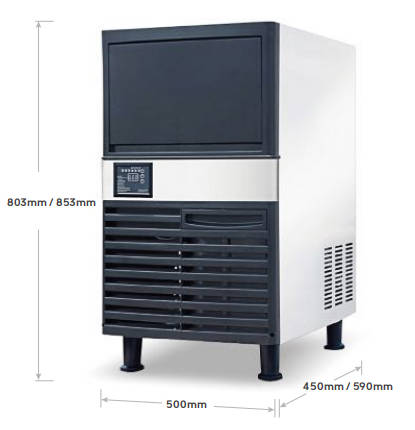
The IM-120P delivers 55kg of ice per 24 hours, with an 18kg ice storage capacity, 480W power and air cooling using R290 refrigerant. Dimensions are 500×590×850mm. It fits neighborhood fresh stores with 1–2 seafood display counters selling fish, shrimp and shellfish, consuming less than 50kg of ice on workdays. The machine automatically produces and stores ice overnight, so staff can retrieve pre-made ice each morning to lay out seafood counters. The R290 refrigerant achieves Class 1 energy efficiency and consumes less electricity than traditional refrigerants, easing power cost pressure for small shops.
Both compact models feature food-grade stainless steel inner tanks and outer shells with automatic cleaning functions. Designed for small neighborhood supermarkets to replace purchased bagged ice and reduce daily ice procurement spending, they have limited daily ice output. They are not suitable for large display counters or extreme holiday ice demand, positioned as backup or basic ice supply for small outlets.
2. Primary Models for Medium-Sized Comprehensive Supermarket Seafood Zones: IM-350M Crescent Ice Maker & IM-128N Nugget Ice Maker
The IM-350M series produces 155kg of ice every 24 hours with a 140kg ice bin and 1050W power. Air-cooled or water-cooled options are available, using R404A refrigerant. Crescent ice is the preferred ice type for seafood display counters. This freestanding integrated unit measures 560×860×1720mm. Its standout feature is the large 140kg ice bin. After the supermarket closes at night, the machine continuously makes ice to fill the bin. The next morning, staff can draw large volumes of ice at once to fully cover seafood counters. It keeps generating supplementary ice during opening hours, easily supporting 2–4 seafood counters and perfectly matching daily seafood sales at medium-sized comprehensive supermarkets.
Advantages of crescent ice: curved with smooth edges and no sharp points, it will not cut fish skin or shrimp shells during ice laying and preserves the presentation of displayed seafood. Minimal gaps between stacked ice pieces create close contact with aquatic products for strong cold retention, slowing seafood warming and dehydration. It melts evenly without generating excessive standing water to ease drainage pressure on display counters. The entire unit’s inner tank and shell are constructed from 304 stainless steel for salt-fog resistance and reliable operation in humid, salty seafood environments. Air-cooled versions install easily without cooling water piping and can be deployed directly in the back-of-house of most medium supermarkets. Stores with high ambient temperatures can select the water-cooled variant for enhanced refrigeration stability.
The IM-128N nugget ice maker produces 120kg of ice per 24 hours with a 50kg ice bin, air-cooled and running on R290 refrigerant. Nugget ice is soft and granular, ideal for laying over shellfish, small shrimp and oysters. It fills gaps between shellfish for outstanding preservation performance. Medium supermarket seafood sections can deploy it as an auxiliary ice maker paired with a primary crescent ice unit.
3. High-Capacity Models for Large Chain Supermarkets & Hypermarkets: IM-520M Crescent Ice Maker, IM-258N / IM-358N Nugget Ice Makers
The IM-520M generates 234kg of ice per 24 hours with a 140kg ice bin and 1400W power, available in air-cooled and water-cooled versions. It suits large comprehensive supermarkets and chain fresh hypermarkets with numerous seafood counters selling chilled fish, lobsters and shellfish, consuming over 200kg of ice daily. Ice demand can exceed 300kg on busy weekends. The IM-520M delivers consistent stable ice production, and its large ice bin buffers peak demand to prevent ice shortages on display counters.
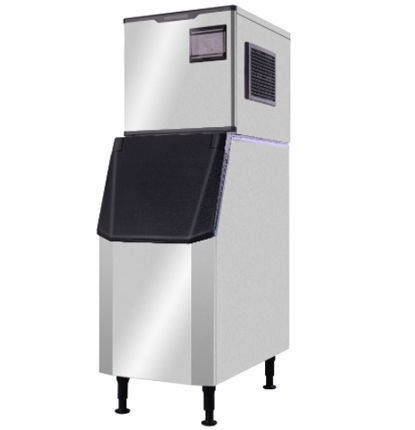
The IM-258N nugget ice maker produces 250kg of ice daily with a 125kg bin; the IM-358N makes 350kg daily with a 125kg bin. Large hypermarkets can adopt a combined setup of a primary crescent ice unit plus auxiliary nugget ice unit. Crescent ice serves whole fish and large shrimp displays, while nugget ice is used for shellfish and sashimi counters. Multiple ice types can be deployed on demand to preserve and display the full range of seafood products.
4. Extra-Large Fresh Cold-Chain Hypermarkets: IM-1500P / IM-2000P High-Capacity Cube Ice Models
The IM-1500P produces 682kg of ice daily, while the IM-2000P delivers 909kg per day. These modular high-output units are built for oversized fresh food hypermarkets and fresh distribution centers with massive seafood sales volumes. They also support seafood packaging for delivery and back-of-house cold storage preservation. Powered by 380V electricity with water cooling and a huge 320kg ice bin, they are ideal for centralized ice production at fresh food hubs of large chain headquarters, with ice distributed to individual display counters.
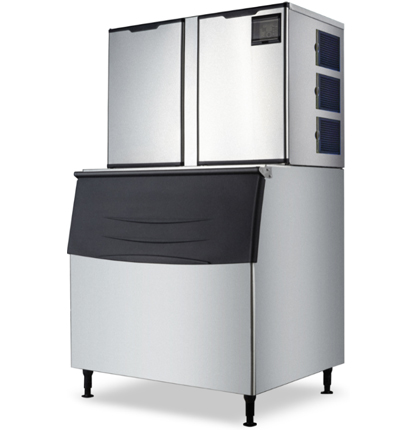
Cooluma’s complete product portfolio offers tiered coverage: neighborhood shops, medium supermarkets, large hypermarkets and fresh distribution centers can all select models with matching capacity and ice types. This is an advantage many brands offering only single ice maker models cannot provide. Supermarket procurement teams can select standalone units or multi-machine combinations based on counter area and daily seafood sales. There is no need to pay for excess production capacity, so budgets can be precisely matched.
III. Five Core Advantages of Cooluma Ice Makers for Supermarket Seafood Applications
Advantage 1: Purpose-built ice shapes for seafood display to reduce fresh produce waste
Seafood preservation has strict ice shape requirements, which is the top concern for supermarkets. Crescent ice from our crescent ice series is widely recognized within the aquaculture industry as the preferred ice for seafood preservation. Smooth curved ice without sharp corners avoids piercing seafood skin during laying and preserves product appearance. Its large contact area rapidly removes heat from seafood, maintaining preservation temperatures around 0°C, slowing microbial growth and extending the shelf life of chilled seafood.
Compared with conventional solid cube ice: cube ice is hard with sharp edges that easily cut fish and shrimp. Damaged seafood not only looks poor but also spoils faster. Large gaps between stacked cube ice lead to uneven cold transfer and localized high temperatures on counters. Stacked crescent ice fits tightly for uniform coverage and stable counter temperatures. Soft, granular nugget ice works well for small shellfish and oysters, conforming to gaps on irregular ingredients. Supermarkets can choose crescent ice, nugget ice or a combination according to seafood varieties to minimize seafood waste.
The ice boasts high purity. The ice-making system is fitted with a pre-filter to remove sediment and residual chlorine, producing ice with minimal impurities and high clarity. Melted water stays clean, so it will not contaminate seafood or leave silt buildup on counters. Most outsourced bagged ice is made with simple equipment, containing many impurities. Its meltwater turns turbid and is prone to bacterial growth.
Advantage 2: Full 304 stainless steel construction for salt-fog corrosion resistance in humid seafood environments
Supermarket seafood zones feature year-round high humidity with airborne sea salt. Ice makers with galvanized steel or ordinary stainless steel casings will corrode quickly. Rust water mixing with ice creates food safety hazards and shortens equipment service life to only 1–2 years.
This commercial ice maker’s outer shell, inner tank and ice bin are all constructed from food-grade 304 stainless steel, delivering excellent salt-fog and rust resistance for long-term reliable operation in humid aquatic environments. The smooth stainless steel surface simplifies routine rinsing for seafood staff. Residual seawater and seafood juices can be wiped or flushed away easily, resisting grime and mold buildup. The evaporator uses a pure copper tube refrigeration system with corrosion resistance and stable heat exchange efficiency. Cooling capacity will not degrade rapidly under prolonged heavy load. The equipment can operate reliably for 5–7 years, drastically cutting equipment replacement costs.
Advantage 3: Large insulated ice bin design to handle fluctuating customer peaks and troughs
The biggest challenge of ice making for supermarkets is uneven ice consumption. Almost no ice is needed overnight when stores close, while ice is continuously consumed during opening hours and demand spikes on weekends and holidays. If the ice bin is too small, ice produced overnight fills the bin quickly and shuts the machine down early. Once ice runs out during business hours, there is insufficient time to produce new ice, leaving counters short of ice and seafood vulnerable to warming and spoilage.
Large models are equipped with high-insulation large-capacity ice bins. The ice bins of the IM-350M and IM-520M crescent ice models hold 140kg of ice, lined with high-density polyurethane insulation to minimize cold loss and slow ice melting inside the bin. The machine runs overnight after closing to fill the bin with ample ice for fully laying all seafood counters first thing the next morning. During business hours, the unit continuously produces ice to replenish consumption, smoothly handling lunch and evening shopping rushes.
Case example for a medium supermarket: the store runs two seafood counters consuming roughly 120kg of ice on workdays, rising to 180kg on weekends. The IM-350M produces 155kg daily and stores 140kg of ice in its bin. Staff access pre-stored ice at opening, and the machine keeps producing ice through the day to replenish consumption. It maintains adequate ice supply even during weekend peaks. Compact IM-80P/IM-120P units suit small shops. While their ice bins are smaller, these stores have low overall ice demand, and overnight ice stock fully meets daily requirements.
Advantage 4: Food-grade water circuits + intelligent self-cleaning to satisfy supermarket food safety compliance
Fresh supermarkets are food businesses subject to regular hygiene inspections of food-contact materials by market regulators. Ice touches seafood directly and counts as a food-related product. Stores face penalties if ice fails bacteria count tests. Cooluma ice makers feature sanitary designs aligned with supermarket food regulatory requirements.
The full ice-making water circuit, water tank and evaporator are made of food-contact materials.
A built-in water filter comes as standard to reduce scale and impurities entering the ice-making system and improve ice cleanliness.
An integrated automatic cleaning cycle can be activated by staff with one touch to flush water circuits and the ice bin, reducing limescale, biofilm and bacterial growth and cutting manual cleaning workload.
The machine includes limescale early-warning alerts. Tap water in seafood zones contains high mineral content that easily forms scale on the evaporator. Scale reduces refrigeration efficiency and harbors bacteria. The equipment intelligently detects limescale and alerts staff to descale and maintain the unit, preventing hygiene risks from accumulated scale over time.
Many low-cost commercial ice makers lack self-cleaning functions. Manual disassembly for cleaning is difficult, and biofilm builds inside water circuits over time, leading to excessive microbial levels in ice.
Advantage 5: Stable refrigeration system with low maintenance for extended intermittent supermarket operation
Fresh zone supermarket equipment runs nearly nonstop all year round. Ice makers operate continuously overnight, placing high reliability demands on compressors. We use premium imported compressors paired with eco-friendly R290/R404 refrigerants. R290 delivers high energy efficiency and lower power consumption, ideal for small and medium models. R404A offers strong cooling capacity and stable load performance for high-output crescent ice and nugget ice units. Variable-frequency refrigeration systems save up to 30% of energy compared with traditional fixed-speed compressors, cutting electricity costs over long-term operation.
The unit features an intelligent control panel that displays real-time ice-making status, full-ice reminders, low-water alarms and fault codes. The simple interface allows regular seafood staff to operate it after brief training. When faults occur, fault codes display directly so technicians can rapidly locate issues and shorten downtime. Low-water protection and auto-stop on full ice halt ice production automatically when water levels are insufficient to prevent dry-running damage. This enables safe unattended overnight operation, so supermarkets can safely run the machine in unmanned back-of-house areas overnight.
Air-cooled models have low installation barriers. Most supermarket back rooms need no cooling water pipe modifications; only tap water supply and drainage plus power connection are required for commissioning. This greatly reduces installation costs and enables simple retrofits for older supermarkets.
IV. Return on Investment Analysis: Helping Supermarkets Cut Seafood Operating Costs
While fresh supermarkets make an upfront capital investment when purchasing IM-series ice makers, the equipment typically pays for itself within 1–2 years compared with ongoing purchases of bagged outsourced ice, alongside reduced seafood waste.
Simple calculation example: A medium supermarket buys 150kg of bagged ice daily at an average market price of approximately ¥1.2 per kg, amounting to ¥180 daily and ¥65,700 per year for ice procurement. Outsourced ice also suffers roughly 15% melting loss in transit, requiring extra ice purchases and additional expenditure. Furthermore, outsourced ice quality is inconsistent. Delivery delays in hot weather often lead to ice shortages.
With the IM-350M crescent ice maker producing 155kg daily, the combined electricity and water cost for making 1kg of ice stands at roughly ¥0.22. Producing 150kg of ice daily costs only ¥33 in utilities, totaling ¥12,045 per year. The supermarket saves over ¥50,000 annually on ice procurement. With an equipment service life of 5–7 years, the machine pays back its purchase cost in around 2 years after accounting for maintenance expenses.
More importantly are the hidden benefits: consistent ice supply maintains low temperatures on seafood counters and reduces dehydration and spoilage rates for seafood. According to fresh industry statistics, waste caused by insufficient ice on seafood counters accounts for 30% of total fresh produce losses. In-house ice makers guarantee continuous ice supply, extend the shelf life of chilled seafood and cut product write-offs. The value saved from reduced waste can even exceed savings from ice procurement alone. Outsourced ice often runs out on weekends, forcing supermarkets to discount or discard seafood and incurring heavy losses.
V. Seafood Application Selection Guide & Operational Precautions
Supermarket Model Selection Reference
Small neighborhood fresh store (1 seafood counter, daily ice consumption <60kg): IM-80P / IM-120P air-cooled cube ice models, countertop installation for simple setup;
Medium-sized comprehensive supermarket (2–4 seafood counters, daily ice consumption 100–200kg): IM-350M primary crescent ice unit, air-cooled preferred; crescent ice laid directly on seafood counters;
Large chain supermarket / hypermarket (4+ counters, daily ice consumption 200–400kg): IM-520M primary crescent ice maker, optionally paired with IM-258N nugget ice auxiliary unit for dual-machine deployment;
Large fresh distribution centers and extra-large stores with daily ice consumption over 500kg: IM-1500P/IM-2000P modular high-capacity models.
Operating Precautions
Tap water in seafood zones contains high mineral levels. It is recommended to add an extra pre-water filter to reduce limescale, extend equipment lifespan and further improve ice hygiene.
Ensure adequate ventilation at the machine’s placement. Position units away from splashing water from seafood tanks to minimize salt mist adhering to the cabinet. Run the auto-cleaning program periodically per equipment prompts, clean filters regularly and conduct a full descaling once per year.
For heat dissipation: reserve sufficient ventilation space around air-cooled models. Do not place them in enclosed cramped spaces; high ambient temperatures will reduce ice-making output.
A wide range of commercial ice maker brands exists on the market. Many only manufacture basic cube ice machines and lack the crescent ice critical for seafood applications. Cooluma supplies cube ice, crescent ice and nugget ice product lines. Supermarkets can purchase multiple units producing different ice shapes from one single brand, with unified after-sales maintenance contacts to reduce the complexity of servicing equipment from multiple suppliers.
Most popular More «
-
How to Choose a Supermarket Display Cooler for Buyer's Guide
-
How to Judge a Cooler Factory by Its Foaming Equipment?
-
R290 or R600a for Cake Display Refrigerators?
-
Is it expensive to customize light strips for cake display chiller?
-
Selection Guide for Shelving Systems of Refrigerated Beverage Display Cabinets
-
How to Control the Procurement Cost of Open Refrigerated Display Cabinets for Supermarkets
-
Air vs Direct Cool Cake Cabinets Advantage and Disadvantage
-
How to Choose an Open Display Cooler for Your Fruit Store?
-
What Is the Standard Temperature for Dessert Display Cabinets?
-
Top Compact Upright Display Cooler for Retail Businesses

