









Cooluma Turnkey Coffee Shop Solution
The global coffee industry is undergoing a structural shift in 2026, and relying solely on beverage sales is no longer enough to sustain profitable store operations. Industry research shows the global bakery and dessert segment within cafés is projected to reach $29.8 billion by 2033, with a compound annual growth rate of 4.9%. Hybrid coffee shops that serve desserts and light bites see average order values 22–35% higher than beverage-only locations. However, many new coffee shops overseas face shared pain points: poor upfront layout planning, mismatched refrigerated display equipment, misalignment between equipment and bar space, persistently high energy costs, and weak in-store brand presentation. Many operators allocate most of their budget to interior finishes while overlooking how refrigeration integrates with store traffic flow and menu positioning. After opening, this often leads to lackluster display performance, high food spoilage rates, and unexpected equipment downtime—all of which directly eat into profit margins.
Cooluma delivers a true turnkey solution for coffee retail locations, rather than simply selling refrigerated display hardware. We serve overseas coffee shop owners, chain brand procurement teams, and project contractors with an end-to-end closed-loop service covering upfront store layout planning, renovation alignment guidance, commercial refrigeration equipment selection, customized retrofitting, delivery and setup, and after-sales support. Drawing on years of experience serving brick-and-mortar locations across North America, Europe, Japan, and Southeast Asia, and aligned with 2026 overseas catering market costs, energy efficiency standards, and compliance requirements, we help clients avoid common startup pitfalls. Our approach ensures equipment supports operational performance, instead of just serving as decorative fixtures.
1. 2026 Coffee Shop Industry Landscape: Why a Complete Store Solution Matters
According to 2026 overseas foodservice industry data, equipment accounts for 25–40% of total startup costs for new coffee shops, renovations make up 35–40%, and working capital takes 12–15%. Many buyers follow a flawed sequence: they finish store construction first, then source refrigeration equipment later. This approach creates real-world problems: display cases that don’t fit the pre-built bar space, electrical systems that don’t match local voltage standards in North America, Japan or Europe, blocked ventilation around compressor units, and conflicting lighting design that undermines dessert visibility.
Market research shows independent coffee shops overseas face the highest risk of closure within 6–12 months of opening. Beyond foot traffic and operational factors, hidden losses from poor hardware choices are significant. A poorly selected display cooler can cause $300–$800 in monthly food spoilage costs. Inadequate ventilation leads to frequent compressor failures, and downtime during peak hours directly translates to lost revenue. Outdated, energy-inefficient coolers add $1,500–$2,200 in extra annual electricity expenses.
Two clear trends are defining coffee shops in 2026:
First, hybrid operations are becoming standard. The coffee-plus-cake-dessert-light-bites model is now the norm, as beverage-only locations struggle to grow. Dessert display coolers have evolved from an optional add-on to a core revenue-driving asset—glass display cases act as silent salespeople, with data showing strategic dessert displays drive over 30% more impulse purchases.
Second, space optimization is critical. With rent continuing to rise, every square meter must balance operational efficiency, display impact, and customer experience—whether in a 20–40㎡ neighborhood shop or an 80–120㎡ premium downtown café. Wasted space from ill-fitting equipment is no longer acceptable.
The core logic of Cooluma’s solution is simple: define the store’s business model first, plan space and traffic flow accordingly, align with interior design in parallel, and then specify a full set of matching refrigerated display equipment—instead of building first and buying equipment later. This eliminates downstream risks of rework, wasted space, and equipment incompatibility from the start.
2. Store Planning & Renovation Alignment Guidance
A complete coffee shop solution does not start with picking machines. It starts with defining the store’s positioning, planning traffic flow, and confirming pre-renovation requirements. Cooluma provides standardized planning references tailored to local market conditions, and offers one-on-one blueprint coordination for chain store projects.
2.1 Store Format & Positioning Categories
Cooluma categorizes coffee shop projects into three tiers, each with distinct layout, design, and equipment configurations.
1) Small neighborhood coffee shops (20–40㎡): Focused on takeout with limited dine-in seating, serving coffee plus a small selection of cakes and desserts. Core priorities: saving bar space, compact equipment footprint, and strong display performance.
2) Standard premium coffee shops (40–80㎡): Dine-in focused, with an expanded menu of cakes, mousses, bagels, and light bites for higher foot traffic. Core priorities: reliable large-capacity display, seamless integration with bar design, and premium customer visual experience.
3) Downtown chain coffee shops (80㎡+): Wide dessert SKU range, high peak-hour traffic, and strict brand identity requirements, with support for OEM custom cabinet exteriors and branded logos. Core priorities: standardized equipment for replicable store design across locations, and compliance with local food safety certifications.
2.2 Traffic Flow Planning Recommendations
Coffee shop traffic design covers both customer flow and staff workflow. A well-designed layout improves drink output speed and reduces congestion.
Customer flow: Enter → order at counter → view dessert display → pay → pick up order → sit down. Cake display coolers should be placed alongside the ordering counter, in the direct path of customers during checkout, to maximize impulse purchases—never tucked away in the back-of-house.
Staff workflow: Espresso machine → grinder → prep counter → refrigeration → pickup window. The workflow should follow a single-direction flow as much as possible, to avoid cross-traffic and redundant movement for baristas.
During the project consultation phase, Cooluma requests store floor plans from clients to recommend optimal cooler placement and specify required ventilation clearance. A commonly overlooked detail: cake display coolers are 24/7 commercial appliances. They require 15–20cm of ventilation clearance at the back and sides. Enclosing these gaps during renovation causes compressor overheating, frequent breakdowns, and shortened equipment lifespan.
2.3 Key Renovation Alignment Points
1) Electrical & voltage: We supply 110V/60Hz configurations for the US market, 100V for Japan, and 220–240V for the EU. Dedicated power circuits with appropriate capacity should be planned during renovation, not shared with espresso machines, to prevent overload and tripped breakers.
2) Lighting & color temperature: Many stores use cool white overhead lighting that clashes with dessert case illumination. Cooluma cake coolers come standard with warm 3000K LED lighting that enhances the color of cakes and mousses without raising internal cabinet temperature. We recommend avoiding direct bright cool-white light on cooler glass, which causes glare and reduces product visibility.
3) Counter dimensions: Bar height and depth must match cooler specifications. Countertop right-angle cake coolers require load-bearing capacity verification for the counter surface; floor-standing models require confirmation of floor load capacity and drainage provisions.
4) Material & aesthetic matching: Cabinet exteriors are available in black, white, and stainless steel finishes to complement wood-warm, industrial, minimalist and other café design styles. Chain locations can further customize cabinet colors and add printed brand logos for a cohesive visual identity.
Practical sizing reference: For 20–40㎡ neighborhood shops, we recommend 900–1200mm wide cake display cases; for 40–80㎡ standard stores, 1200–1500mm units; for chain locations, multiple units can be arranged side by side for a continuous display effect.
3. Complete Refrigerated Display Equipment Portfolio
Once the store layout and renovation plan are finalized, we specify a full set of matching refrigeration equipment. Coffee shop refrigeration falls into four categories: dessert & cake display coolers, under-counter worktop refrigerators, upright beverage display coolers, and optional ice cream freezers. Working together, they cover all low-temperature storage and display needs for a coffee shop. All Cooluma equipment carries CE, ETL and other required overseas market certifications, features eco-friendly refrigerant, copper tube evaporators, and food-grade 304 stainless steel interiors to meet international catering hygiene standards.
3.1 Right-Angle Cake & Dessert Display Cooler (Core Revenue-Driving Equipment)
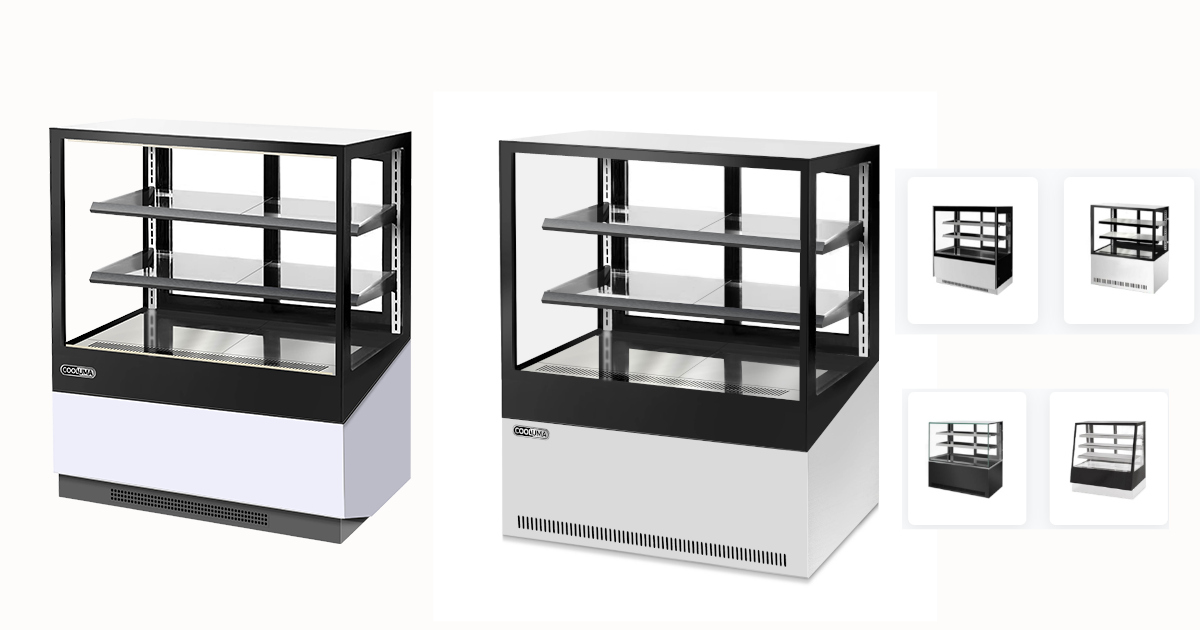
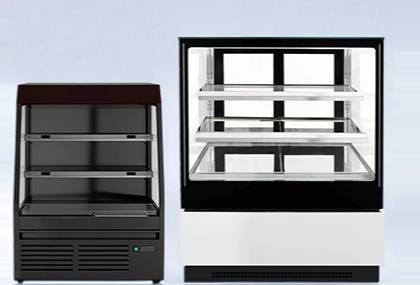
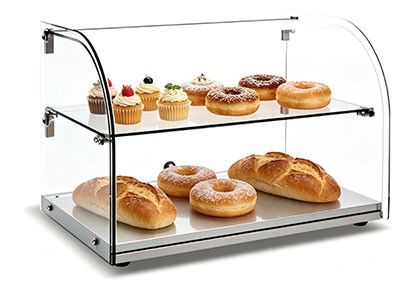
Maintaining a 2–8℃ temperature range, this is the widely requested right-angle cake display case, designed specifically for cakes, mousses, puddings, bagels and other desserts.
- Features: Tempered double-layer insulating glass, multi-tier adjustable load-bearing shelves, built-in warm LED lighting, forced-air circulation for even temperature and minimal frost buildup, and automatic defrost to reduce manual maintenance.
- Specifications: Available in 900–2000mm widths, with support for custom non-standard dimensions.
- Two installation formats: Countertop placement on bar counters, or freestanding floor placement.
- Business value: Placed in the ordering zone, it showcases desserts visually and lifts average order value. Many coffee shops prioritize only espresso machines and overlook display coolers, leaving significant dessert revenue on the table.
3.2 Under-Counter Worktop Refrigerators
Installed beneath the bar and out of customer view, these units store fresh milk, cream, and semi-finished dessert ingredients. Within easy reach during bar operations, they improve barista efficiency while maintaining a steady 2–8℃ storage temperature for food safety.
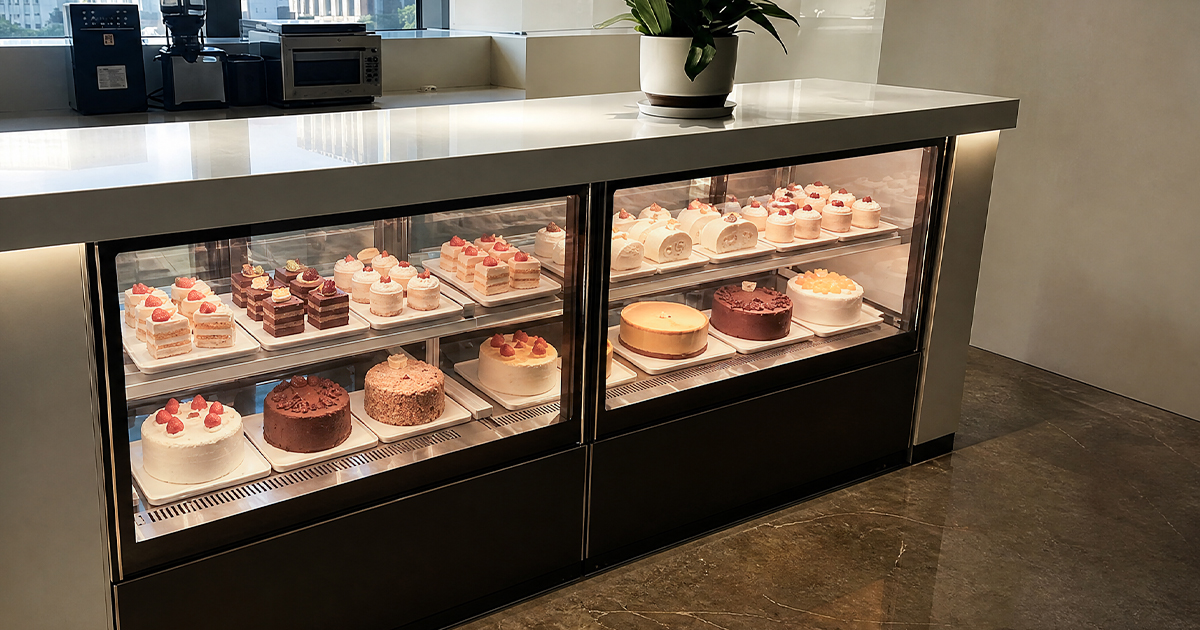
3.3 Upright Beverage Display Coolers
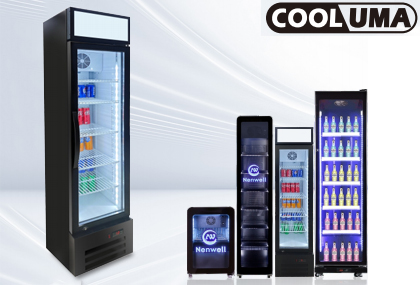
Used for displaying bottled drinks, cold brew coffee, and ready-to-drink beverages. Placed near the store entrance or checkout counter, they expand beverage SKUs and drive additional incremental sales.
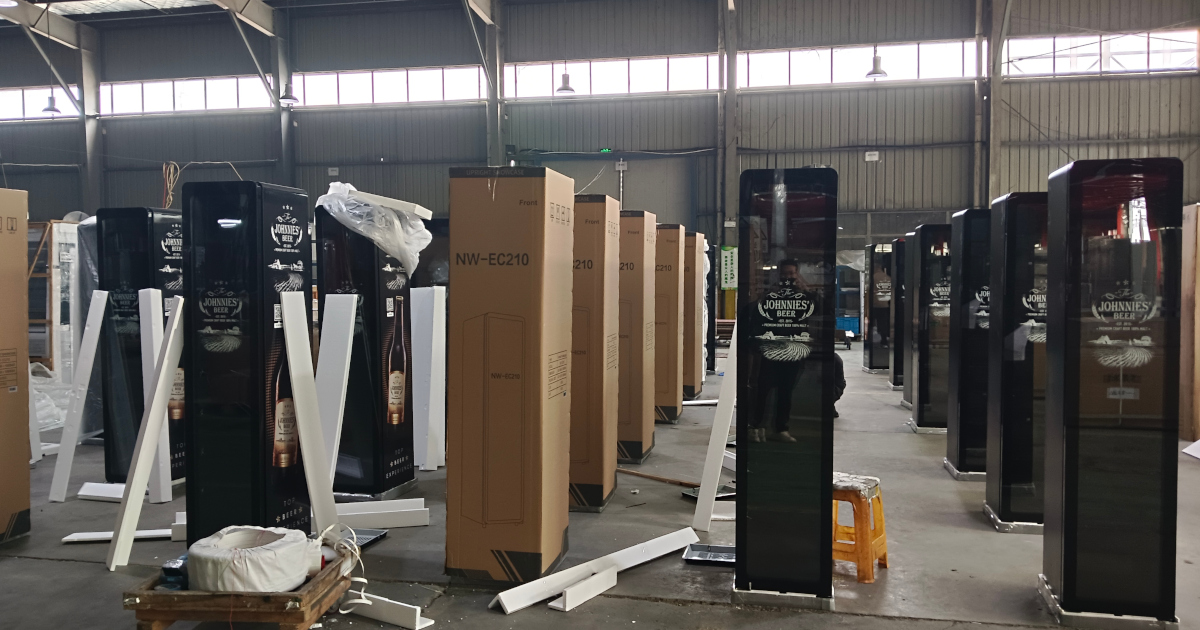
3.4 Ice Cream Freezers (Optional Upgrade)
For stores adding ice cream and frozen dessert items, these units maintain –18 to –22℃ to expand summer revenue and enable a full coffee + dessert + ice cream product mix.
3.5 Custom OEM/ODM Capabilities (Key Advantage for Chain Projects)
For coffee chain brands, Cooluma offers deep customization: custom cabinet colors, branded logo printing, adjustable shelf configurations, modified exterior panel materials, and alignment with unified store VI standards.
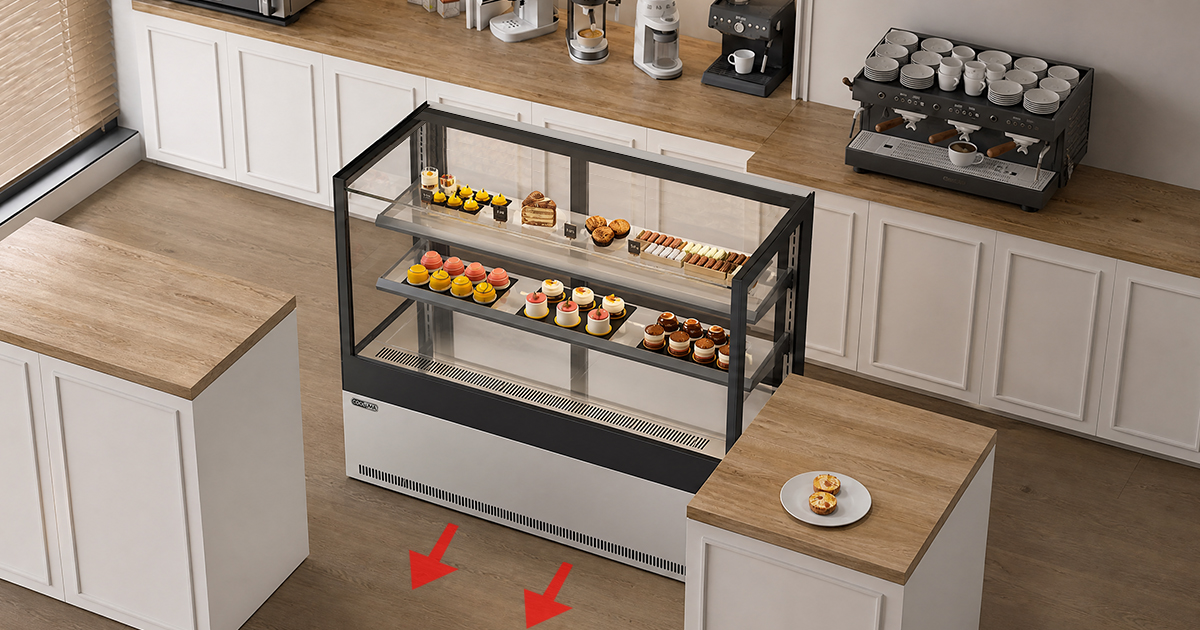
A key 2026 trend in overseas chain procurement is that brands no longer want generic one-size-fits-all coolers—they want refrigeration that acts as a brand visual asset. Our customization services help chains build differentiation, and we deliver standardized bulk production of the same model to ensure consistent equipment across global store locations.
Budget reference: For new coffee shops overseas, a complete refrigeration package typically costs $3,000–$6,000 for small shops, $6,000–$12,000 for standard premium cafés, and higher for large chain locations based on configuration. Equipment selection is determined by store size, menu SKU count, and order volume. Cooluma never pushes overpriced unnecessary equipment; we base recommendations first and foremost on a store’s actual operational needs.
4. End-to-End Implementation Support: Beyond Hardware Delivery
Most suppliers in the market only sell equipment. The value of Cooluma’s coffee shop solution lies in our full-chain service, especially for overseas clients, addressing pain points across procurement, delivery, and after-sales.
-
Upfront solution design phase
Clients provide store size, floor plans, target market (US/Japan/Europe, etc.), menu categories, and order volume. We deliver layout recommendations, equipment model lists, voltage configuration details, pre-installation requirements (electrical, ventilation, drainage), and a detailed budget breakdown. We do not compete on unrealistically low prices; instead, we transparently share key details on energy consumption and long-term maintenance to help clients make informed investment calculations. -
Sample & bulk order phase
Small-batch trial orders are supported. Chain brands can test prototype units first to verify display effect, dimensions, and custom logo results before moving to mass production. All units ship with full certification documentation, meeting import clearance requirements for North America, Europe and Japan to eliminate customs risk. -
Logistics & delivery guidance
We support international buyers with ocean freight packing, provide detailed packing lists, and include documentation for unboxing, moving, and startup commissioning. A common mistake for overseas buyers is powering on commercial coolers immediately after long ocean transit—units must sit upright for 4–12 hours first. This critical step is clearly outlined in our implementation guides. -
Ongoing maintenance & after-sales support
Commercial coolers run 365 days a year, so ongoing maintenance directly impacts store operations. Cooluma provides full English service manuals, wear parts lists, and clear warranty terms. For large engineering projects, we ship spare parts kits alongside the equipment. We also provide routine maintenance guidelines covering cleaning schedules, defrost procedures, and ventilation checks to help clients reduce failure rates and extend equipment lifespan.
5. Data-Driven ROI Analysis of Equipment Investment
Many clients ask what return they can expect from investing in a full refrigeration setup. Below is an objective calculation based on 2026 overseas coffee shop operating data.
Take a standard 45㎡ premium coffee shop as an example:
The store averages 180 orders per day. Selling only coffee, the average order value is $6.20. After adding dessert displays, 32% of customers add a cake or dessert to their order, adding an average of $3.80 per order—lifting average order value to $8.10. Based on 320 operating days per year, this generates approximately $219,000 in incremental annual revenue from desserts alone. After deducting dessert ingredient costs, the cake display cooler delivers an annual gross profit increase of roughly $73,000–$88,000.
Beyond revenue growth, high-quality commercial coolers reduce two hidden costs:
First, food spoilage. A temperature-stable forced-air cake cooler keeps dessert spoilage at 5–8%. Low-quality coolers with wide temperature fluctuations can see spoilage rates of 18–25%, creating a difference of thousands of dollars per year per location.
Second, energy costs. Cooluma’s high-efficiency refrigeration models save $1,600–$2,200 in annual electricity costs compared to older standard coolers, delivering clear long-term value.
Important note: Equipment is only a tool and cannot guarantee store profitability. However, thoughtful store planning paired with properly specified refrigerated display equipment amplifies operational strengths and reduces avoidable losses.
6. Who Benefits from Cooluma’s Complete Coffee Shop Solution
- Overseas independent coffee shop startup founders: Building a shop from scratch and needing full planning support to avoid costly mistakes.
- Existing coffee shops undergoing renovation: Replacing aging coolers, optimizing display layout, adding dessert categories, and lifting average order value.
- Coffee chain brands and trade importers: Needing bulk procurement with OEM cabinet and logo customization for consistent branding across locations.
- Contractors and project integrators: Managing coffee shop fit-out projects and needing a reliable, certified supplier for complete refrigeration packages.
In 2026, competition in the global coffee industry has shifted from competing only on drink quality to competing on overall in-store experience and hybrid category operations. Cooluma delivers a complete closed-loop solution, from upfront space planning and renovation prerequisites to equipment selection, custom retrofitting, production, delivery, and maintenance guidance. Aligned with regional voltage and certification standards, we deliver tailored solutions to clients across the US, Japan, Europe, and Southeast Asia—backed by real data and proven project experience, for reliable, end-to-end support clients can trust.
Most popular More «
-
Selection Guide for Shelving Systems of Refrigerated Beverage Display Cabinets
-
How to Control the Procurement Cost of Open Refrigerated Display Cabinets for Supermarkets
-
Air vs Direct Cool Cake Cabinets Advantage and Disadvantage
-
How to Choose an Open Display Cooler for Your Fruit Store?
-
What Is the Standard Temperature for Dessert Display Cabinets?
-
Top Compact Upright Display Cooler for Retail Businesses
-
SM15A Commercial Slush Machine Specification
-
Commercial Pastry Display Case Buying Guide for Bakeries & Cafés
-
Cooluma Ice Machines for Seafood Sections in Supermarkets
-
Cooluma Turnkey Coffee Shop Solution