









How to Choose Overseas Warehouses for Ice Cream Freezers
Among cross-border e-commerce home appliances, ice cream freezers belong to commercial refrigeration equipment, featuring large heavy cargo size, precise temperature control, fragility and moisture sensitivity. The selection of overseas warehouses directly affects warehousing safety, delivery efficiency, operational costs and after-sales service experience. Unlike ordinary small goods, ice cream freezers set higher standards for warehouse hardware, operational capacity, cold chain support and compliance qualifications. Improper warehouse selection will easily lead to high cargo damage rate, temperature control failure, delivery delays and out-of-control costs.
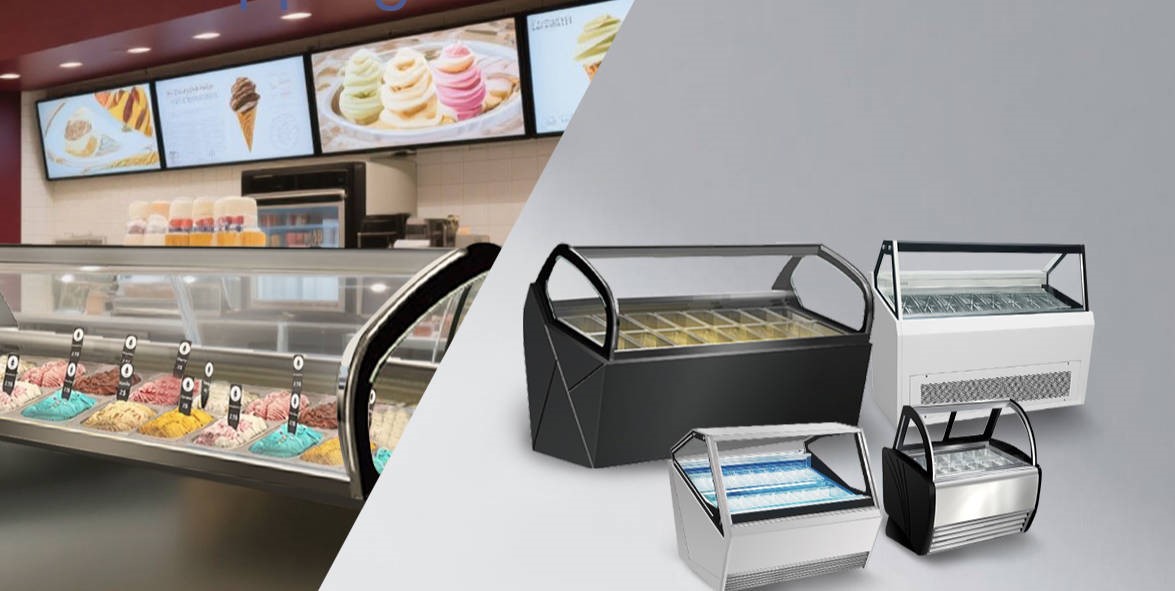
1. Clarify Core Demands for Ice Cream Freezer Overseas Warehouses
Before selecting an overseas warehouse, define core demands based on product attributes, business models and target markets to avoid blind choices.
1.1 Product-oriented Demands: Match Large-sized & Precision Refrigeration Equipment
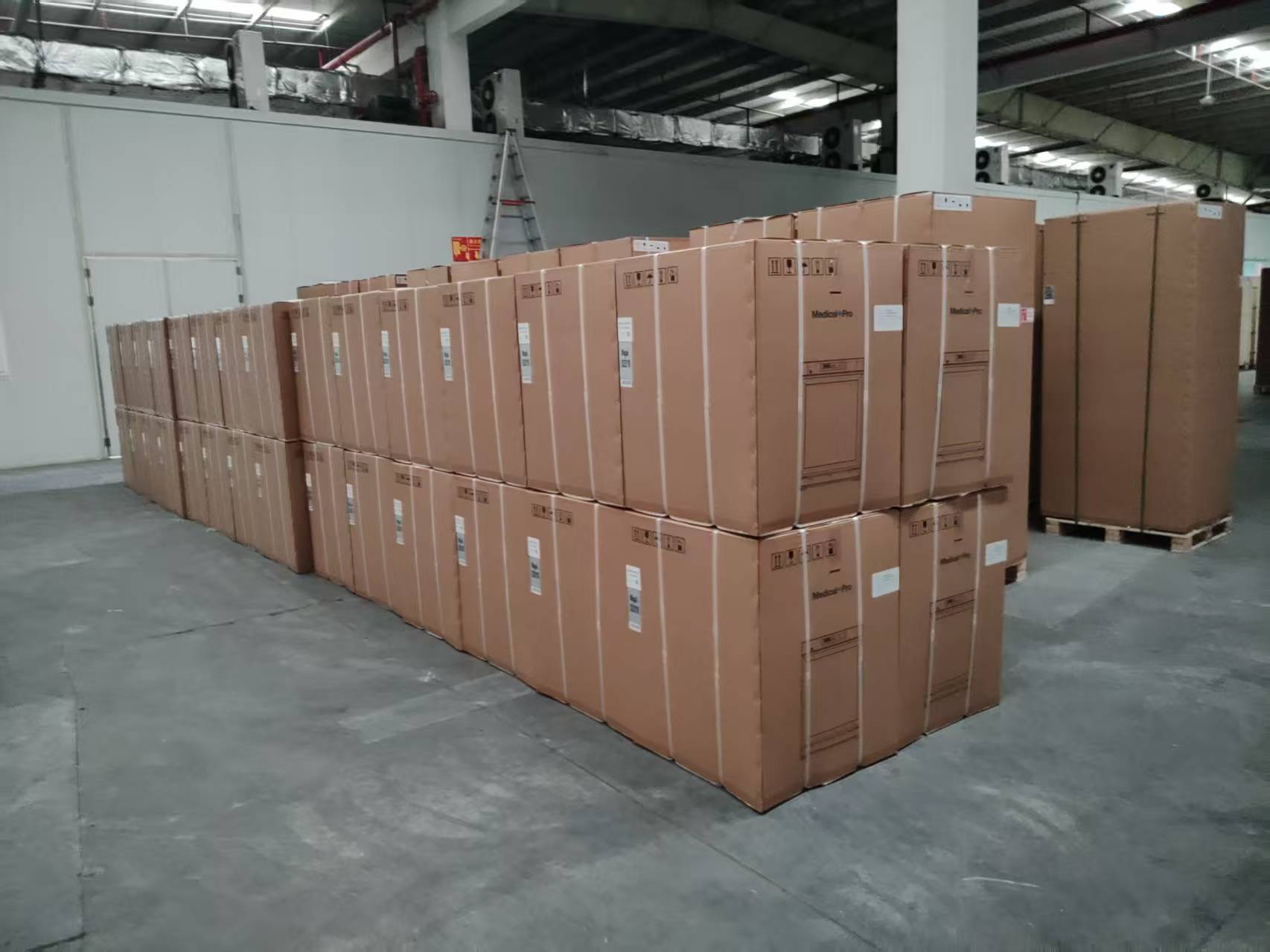
Ice cream freezers are medium and large home appliances, with single unit weight ranging from 50 to 150kg. They have bulky volume and sophisticated structures, with core components including compressors, temperature control systems and glass doors. They are vulnerable to collision, tilting, temperature difference and dampness. Thus overseas warehouses must be equipped with heavy-duty shelves, professional loading and unloading equipment as well as moisture-proof and dust-proof environments, and adopt standardized operation procedures for refrigeration equipment to prevent compressor displacement, glass door breakage and damage to temperature control parts during handling.
1.2 Business Model Demands: Fit Stock Volume & Fulfillment Timeliness
Amazon & Independent Station Premium Model: Focus on stable warehousing, dropshipping, label replacement and inventory early warning. The warehouse needs to connect with platform systems for real-time inventory synchronization and support small-batch and multi-batch stock preparation.
Wholesale & Offline Channel Model: Prioritize bulk storage, full-container delivery and warehouse transfer. Sufficient storage space, full-container loading capacity and proximity to ports or logistics hubs are required to cut first-mile and last-mile logistics costs.
Seasonal Promotion Model: Ice cream freezers see surging market demand in summer. Warehouses need to have peak season expansion capacity and high inventory turnover efficiency to avoid warehouse congestion and delays, and flexibly adjust storage space in off-seasons to reduce idle costs.
1.3 Target Market Demands: Conform to Regional Layout & Compliance Rules
North America (USA & Canada): Prioritize core warehouses in West America (Los Angeles), Central America (Dallas) and East America (New York). West America warehouses near Los Angeles Port feature short sea shipping lead time and low costs; East America warehouses cover 70% of the US population with fast last-mile delivery within 1-2 days.
Europe (Germany, UK, France): Prefer warehouses in Duisburg of Germany, London of UK and Rotterdam of Netherlands. Warehouses shall comply with EU CE certification and food equipment standards, and be familiar with EU OSS VAT declaration regulations.
Southeast Asia: Choose warehouses in Singapore, Malaysia and Thailand, focusing on low-cost warehousing and local delivery suitable for small and medium-batch stocking.
2. Six Core Evaluation Criteria for Selecting Ice Cream Freezer Overseas Warehouses
2.1 Warehouse Network Layout & Geographic Location: Determine Efficiency & Costs
Geographic location is the primary factor influencing first-mile shipping costs, last-mile delivery speed and market coverage.
Priority for Core Locations: Warehouses should be within 30 kilometers of ports, airports and transportation hubs such as Los Angeles Port and Duisburg Logistics Park, to lower trailer fees and warehousing lead time and avoid cargo damage caused by long-distance transshipment.
Matched Market Coverage: Select warehouse sites according to customer distribution, e.g. California warehouses for West US market and German warehouses for European markets, so as to shorten delivery distance and reduce large-item shipping fees which rise with mileage.
Multi-warehouse Coordination Capacity: Reliable service providers need to build multi-regional warehouse networks covering West US, East US and Europe, supporting cross-warehouse allocation and nearby delivery to cope with peak season stock pressure and urgent orders, and enhance fulfillment flexibility.
2.2 Hardware Facilities & Storage Conditions: Guarantee Equipment Safety
Ice cream freezers have strict requirements on warehousing facilities that ordinary shelf warehouses cannot meet. Key facilities to check are as follows:
Storage Space & Shelves: Opt for self-operated large-item warehouses instead of subleased shared warehouses. Match warehouse area with stocking volume: 500-2000 square meters for small and medium sellers and over 5000 square meters for large sellers. Equip with heavy-duty or cantilever shelves with single-layer load capacity over 500kg and aisle width above 3 meters for smooth forklift access and collision prevention.
Moisture-proof, Dust-proof & Temperature Control: Adopt enclosed constant-temperature warehouses rather than open-air or simple shed warehouses. The ground shall be moisture-proof treated and walls heat-insulated with dehumidifiers installed to keep humidity between 60% and 70%, preventing metal rust and circuit short circuit. Cold chain environment is unnecessary, yet extreme temperatures above 30℃ or below 0℃ must be avoided to protect temperature control systems.
Loading & Unloading Equipment & Yard: Equip with 3-ton+ heavy-duty forklifts, hydraulic pallet trucks and lifting platforms and employ professional teams for large cargo handling. Spacious and flat yards are required for full-container truck parking and mechanized operation to minimize manual-handling-related damage.
Safety Protection: Complete fire control systems, full-coverage monitoring and 24-hour on-site security are essential. Cargo insurance covering breakage, loss and fire risks shall be purchased to mitigate unexpected losses.
2.3 Operational Capacity & Practical Experience: Lower Cargo Damage Rate
For precision large-sized ice cream freezers, operational experience weighs more than pricing. Verify the practical capabilities of service providers strictly.
Large Cargo Handling Experience: Choose providers with proven experience in handling home appliances and refrigeration equipment, who master standard rules including tilting angle within 45 degrees, inward placement of glass doors and upward placement of compressors, and control cargo damage rate below 1%.
Order Processing Efficiency: Ensure 12-hour order response and 24-hour outbound delivery with peak season delay rate under 5%. Implement standardized SOP covering inbound quality inspection, labeling, packaging and outbound verification to avoid wrong or missing shipments.
Inventory Management Ability: Deploy mature self-developed WMS systems that support API connection with Amazon, Shopify and other mainstream platforms to synchronize real-time inventory data, send stock shortage alerts and provide restocking suggestions to prevent overselling or stockout. Conduct weekly and monthly inventory audits to maintain inventory accuracy above 99.5%.
Reverse Logistics Service: Given high after-sales return rates of ice cream freezers, suppliers need to offer services including return inspection, cleaning, refurbishment, repackaging and re-shelving, as well as photo verification and damage assessment to cut return losses, plus equipment destruction services for compliant disposal of scrapped goods.
2.4 Charging Rules & Price Transparency: Control Overall Costs
Hidden charges are common in overseas warehouse services. Confirm full-link cost details to avoid excessive expenditure.
Main Charge Items
Inbound fee: Charged per unit or cubic meter including unloading, checking, inspection and shelving, 15 per unit.
Warehousing fee: Calculated by cubic meter per month, average rate 15 per square meter monthly for large-item warehouses (higher in West US than East US, higher in Europe than North America), with tiered pricing available for long-term storage.
Operation fee: Covering order processing, packaging and labeling, 8 per order; extra reinforcement packaging fee 5 per glass-door freezer.
Last-mile delivery fee: Calculated by weight, size and distance, 80 per unit for US domestic delivery and 120 per unit for European delivery, cooperating with UPS, FedEx and local large-item logistics providers.
Value-added service fee: Separately quoted for label replacement, photo shooting, return processing and warehouse transfer with unit prices confirmed in advance.
Price Transparency Requirements: Require written cost lists specifying all charge items, unit prices and billing methods without hidden fees. Avoid traps of low warehousing fees paired with high operation fees, and calculate comprehensive unit cost covering first-mile shipping, warehousing, operation and last-mile delivery instead of focusing on single low-cost item.
Flexible Settlement: Support weekly and monthly settlement with detailed bills including cost breakdowns, inventory reports and order records. Some providers offer 30-60 days credit terms to ease capital pressure.
2.5 System Connection & Digital Capability: Boost Operational Efficiency
Digital management is core competitiveness for cross-border sellers. Overseas warehouse systems shall seamlessly connect with seller ERP and e-commerce platforms to realize data interconnection and automatic operation.
Core WMS Functions: Support real-time inventory inquiry, automatic order synchronization, outbound scanning verification, logistics tracking and data report export, as well as multi-SKU management, batch management and serial number tracking meeting home appliance traceability demands.
Platform Compatibility: Be well connected with mainstream home appliance sales platforms including Amazon (FBA & third-party warehouses), Shopify, Walmart and Wayfair to realize automatic order pushing, real-time inventory sync and logistics information feedback, reducing manual work and error rates.
Data Security & Stability: Ensure complete data backup, anti-attack performance and stable server operation to prevent data loss and system crash. Provide API documents and technical support for customized docking demands.
2.6 Compliance Qualifications & Localized Services: Avoid Policy Risks
Cross-border home appliance trade faces strict compliance regulations. Qualified overseas warehouses must hold complete certifications and strong localized service capabilities to handle customs, tax and product compliance issues.
Complete Basic Qualifications: Possess warehousing business licenses, international freight forwarding qualifications and import & export rights. Self-operated warehouses shall provide property certificates or long-term lease contracts to eliminate illegal warehouse risks. Food-contact ice cream freezers need to meet US FDA and EU CE standards, and service providers shall be familiar with compliant labeling rules.
Customs Clearance & Tax Service: Offer first-mile customs clearance, tariff payment and VAT declaration services, being familiar with US ISF declaration rules and EU OSS policies to avoid clearance delays and fines. Bonded warehouse services are optional to reduce tax expenses.
Localized After-sales & Communication: Equip with bilingual customer service teams covering local business hours in North America and Europe with response time within 2 hours to solve order anomalies, cargo damage claims and after-sales consultations timely. Cooperate with local maintenance institutions to handle simple equipment faults and improve customer satisfaction.
3. Common Pitfalls to Avoid When Choosing Ice Cream Freezer Overseas Warehouses
3.1 Stay Away from Low-price Traps and Unprofessional Small Warehouses
Many small-scale overseas warehouses attract clients with ultra-low warehousing fees yet suffer from simple hardware, irregular operations, high cargo damage rates and poor after-sales support. As high-value large goods, ice cream freezers will cause huge losses once damaged. Prioritize professional suppliers focusing on home appliances and large cargo with over 3 years of operation experience and famous brand cooperation cases. Properly raising costs by 5%-10% ensures stable and safe services.
3.2 Choose Self-operated Warehouses Rather Than Shared or Subleased Warehouses
Shared and subleased warehouses cannot guarantee stable storage space, standardized operations and unified management, which easily lead to resource extrusion, low operation priority and high damage risks especially in peak seasons. Self-operated warehouses feature controllable storage capacity, unified operation standards, timely anomaly handling and stable service quality, ideal for long-term stocking of ice cream freezers.
3.3 Verify Insurance & Compensation Clauses and Clarify Liability Division
Confirm clear compensation standards for cargo damage, loss and delivery delays before cooperation. Require sufficient cargo insurance with explicit claim procedures and 7-15 days compensation cycle. Put all compensation terms into formal contracts instead of oral promises, and specify liabilities such as full compensation for damages caused by warehouse operational errors excluding force majeure factors.
3.4 Conduct On-site Inspection or Live Video Warehouse Verification
Carry out on-site warehouse inspection before signing contracts to check hardware facilities, operation flows, storage environments and team scale. If on-site visit is unavailable, ask for real-time live video verification to confirm actual warehouse address, area, shelves and handling equipment consistent with promotional information.
4. Practical Suggestions for Overseas Warehouse Cooperation
4.1 Conduct Small-batch Trial Orders to Verify Service Quality
Avoid large-scale stocking at the first cooperation. Start with 50-100 units trial orders to test core indicators including inbound efficiency, inventory management, order fulfillment, after-sales response and cargo damage rate, then expand stocking volume gradually after full confirmation to cut trial costs.
4.2 Sign Formal Contracts with Clear Rights and Obligations
Sign official service contracts specifying core terms including service scope, cost details, settlement cycles, inventory accuracy standard, maximum allowable cargo damage rate, compensation rules, liability for breach of contract, contract term and termination conditions to prevent subsequent disputes.
4.3 Establish Regular Communication Mechanism for Timely Problem Solving
Assign exclusive account managers and build daily communication groups to synchronize inventory data, order status and abnormal issues in real time. Hold monthly review meetings to summarize service problems, optimize cooperation processes and improve collaboration efficiency.
The core principle of selecting overseas warehouses for ice cream freezers is to take product characteristics as the foundation, warehouse network layout as the premise, hardware facilities as the guarantee, operational capacity as the core, compliance and cost control as the bottom line and long-term stable cooperation as the ultimate goal. Cross-border sellers shall abandon the mindset of only focusing on low prices, and comprehensively evaluate suppliers in terms of professionalism, stability, service capability and compliance qualifications. Prioritize self-operated large-item warehouses with rich home appliance handling experience, transparent charging rules, mature management systems and complete localized services.
The above content is for reference only, subject to actual data. Wish you smooth business operation.
Most popular More «
-
Air vs Direct Cool Cake Cabinets Advantage and Disadvantage
-
How to Choose an Open Display Cooler for Your Fruit Store?
-
What Is the Standard Temperature for Dessert Display Cabinets?
-
Top Compact Upright Display Cooler for Retail Businesses
-
SM15A Commercial Slush Machine Specification
-
Commercial Pastry Display Case Buying Guide for Bakeries & Cafés
-
Cooluma Ice Machines for Seafood Sections in Supermarkets
-
Cooluma Turnkey Coffee Shop Solution
-
How To Choose Commercial Display Freezer For Ice Cream Shop
-
Solutions to Glass Fogging & Water Dripping for Café Cake Display Fridges